Traditional Palatal Expander (RPE)
Help support your child’s jaw development with a Traditional Palatal Expander (RPE), a fixed orthodontic device that gradually widens a narrow upper jaw.
Suitable for growing children with narrow upper dental arches, certain crossbites or insufficient space for developing permanent teeth.
Expansion Orthodontics Quick Summary
- 17+ Years of Combined Experience
- Experience Managing Complex Orthodontic Cases
- Non-Extraction Approach
- Orthodontic Care for Growing Children
- 300+ Braces Cases Per Year
- Open 6 Days a Week
Transparent and Affordable Traditional Palatal Expander Treatment
At kohe™ Dental, we keep treatment fees clear and transparent, so that you know exactly what to expect before you begin treatment.
Our packages include a consultation, necessary X-rays, 3D intraoral scans, and review visits, unless otherwise stated. We also do not charge for disposables and consumables.
CHILDREN
UNDER 12 YEARS
Traditional Palatal Expander (RPE)
ONE-TIME PAYMENT
$1,680
$1,831.20 INCLUSIVE OF 9% GST
Package Inclusions
- Consultation
- X-rays
- 3D scans
- 3D facial scans
- 3D treatment planning
- Traditional Palatal Expander
- Review visits
Traditional Palatal Expander At a Glance
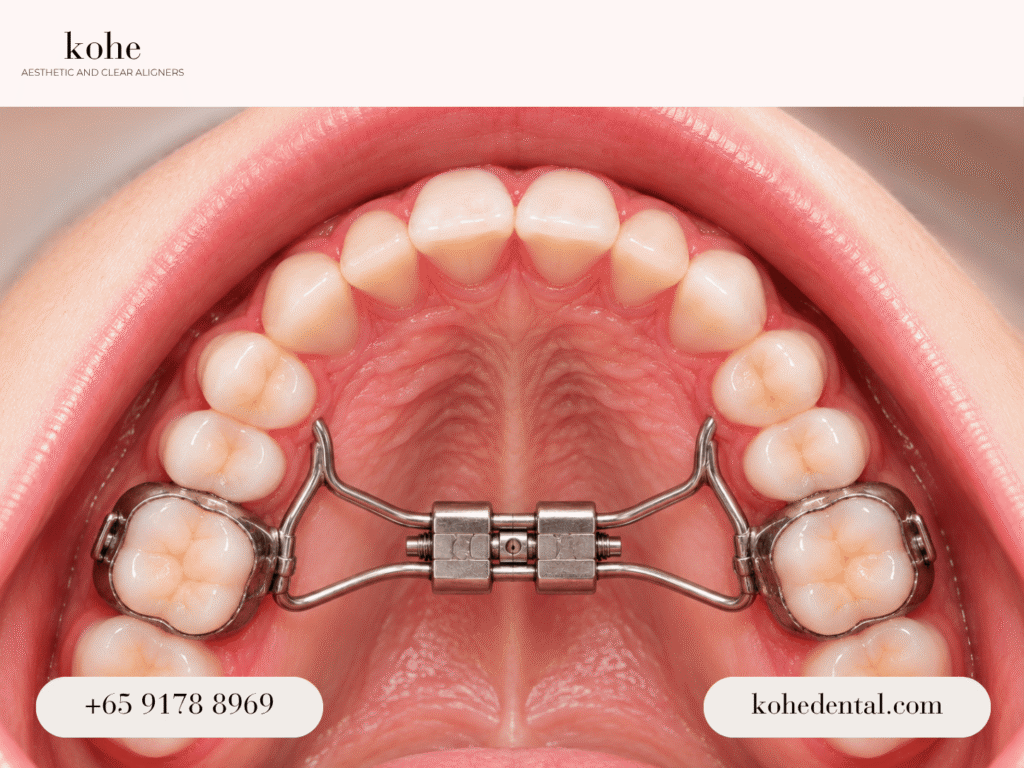
A Traditional Palatal Expander (RPE) is a fixed orthodontic appliance that widens a growing child’s upper jaw.
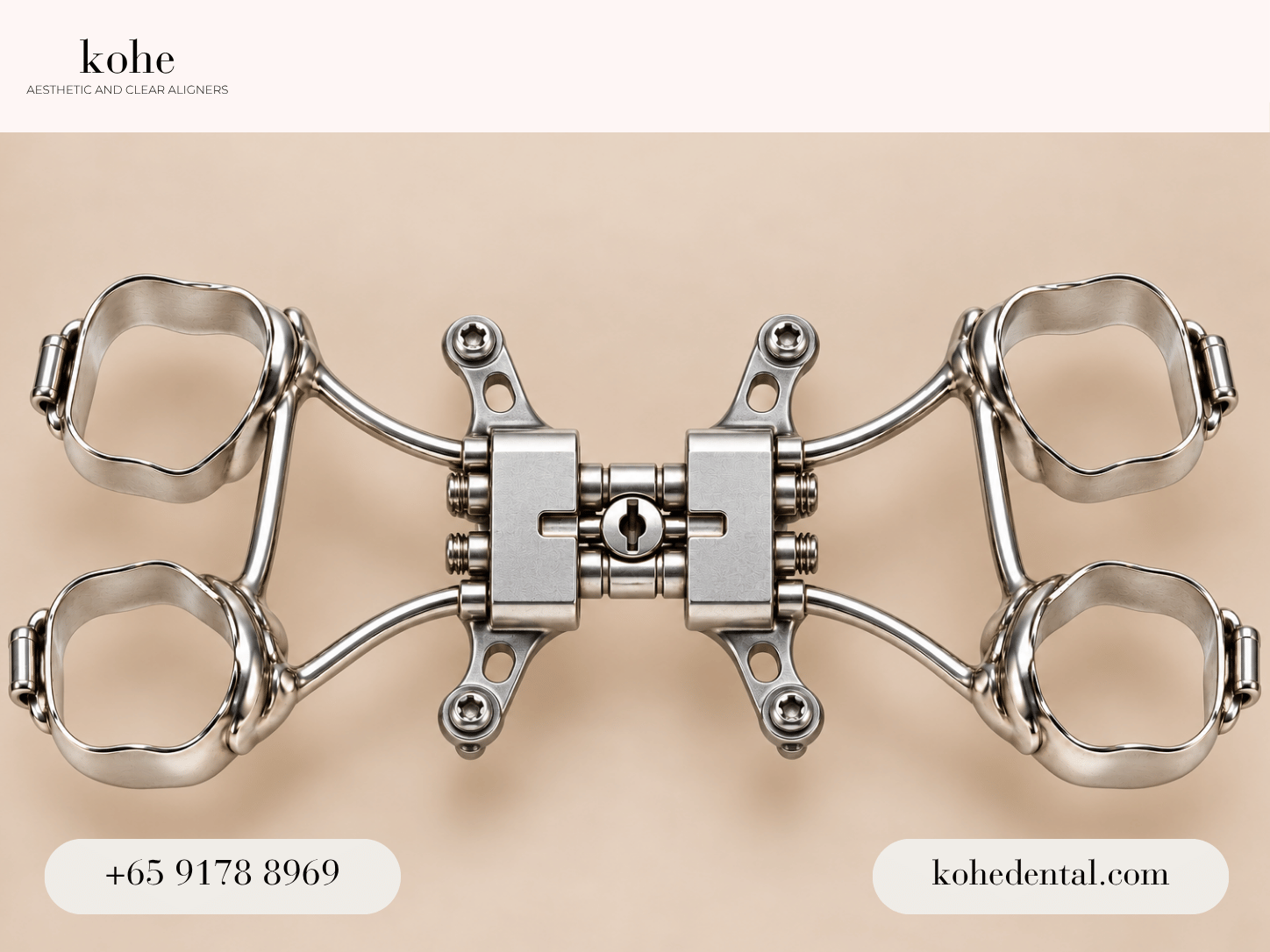
The appliance sits across the roof of the mouth and is attached to the upper teeth. A small screw at the centre of the appliance is activated gradually according to your dentist’s instructions. This applies pressure to the two sides of the upper jaw, widening the palate over time.
RPE is commonly recommended for growing children with narrow upper jaws, overcrowded teeth and crossbite.
As children grow, the bones of their upper jaw gradually mature, making RPE treatment more suitable at a younger age. Your dentist will assess your child’s stage of development before recommending treatment.
Benefits of Traditional Palatal Expander
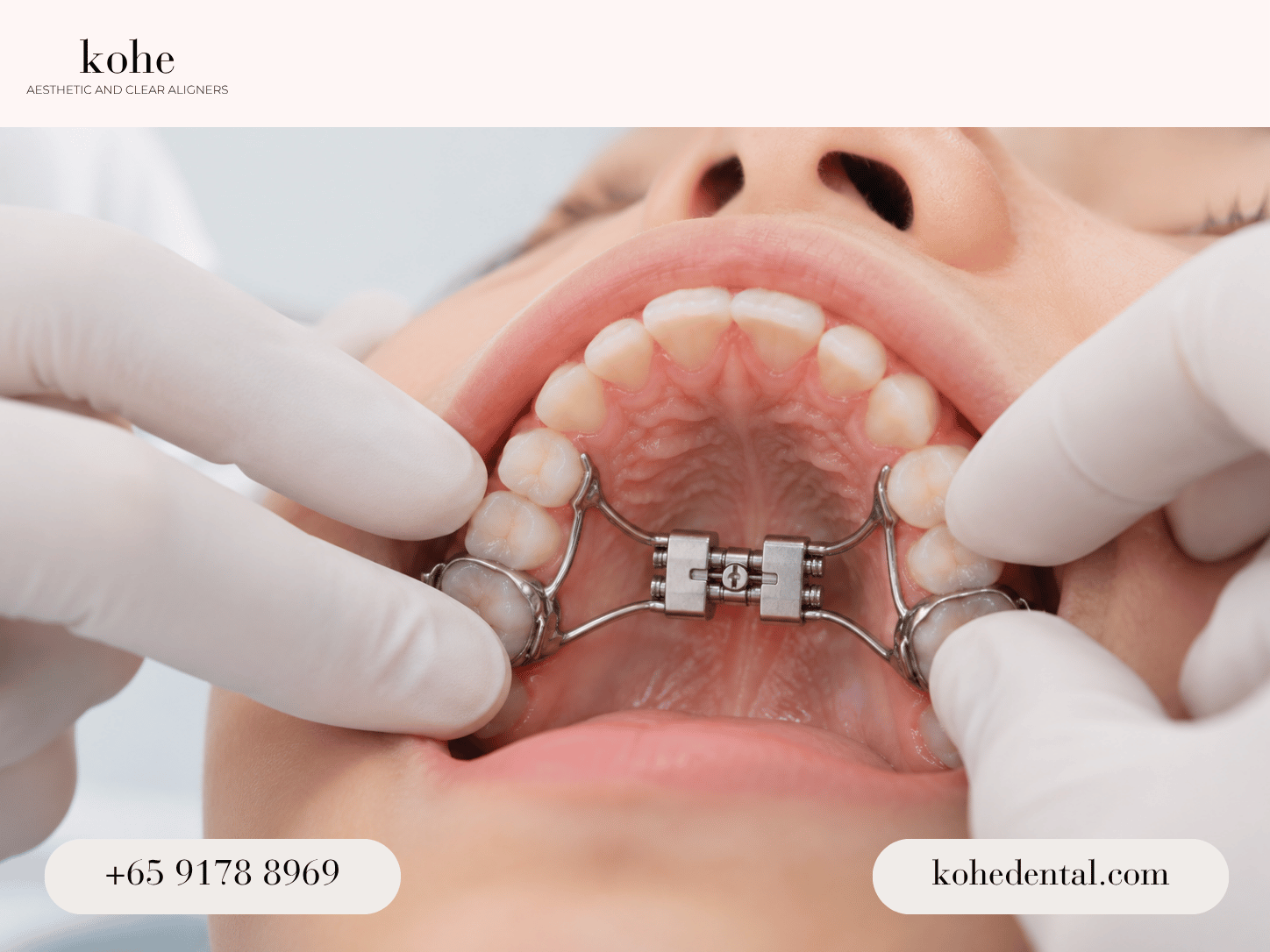
A Traditional Palatal Expander helps young patients create space within their upper palate and reduces the need for future extractions.
Creates space without extractions
When the dental arch is too narrow to accommodate all the teeth, crowding occurs. Expansion with a Traditional Palatal Expander increases the available arch width, creating more space for the teeth. In suitable cases, this may reduce the need for extractions.
Supports proper tooth eruption
In growing children, a narrow dental arch can limit the space available for adult teeth to erupt. A Traditional Palatal Expander can create more room for erupting teeth, which may reduce the risk of future teeth crowding.
Corrects certain crossbites
A narrow upper jaw can cause the upper back teeth to bite inside the lower back teeth, resulting in a crossbite. By widening the upper jaw, a Traditional Palatal Expander helps create a more balanced bite and may reduce uneven jaw movements associated with certain crossbites.
Supports jaw and bite development
A Traditional Palatal Expander addresses a narrow upper jaw while your child is still growing. By widening the upper palate, RPE improves the relationship between the upper and lower jaws, creating a more balanced bite and suitable foundation for orthodontic treatment.
May improve nasal airway space
As the upper jaw forms part of the nasal cavity, widening it may increase nasal airway space in some children. While this may support nasal breathing, RPE treatment does not replace medical treatment for breathing or sleep disorders.
Supports future orthodontic treatment
An RPE creates additional space in the upper palate without the need for extractions. This can make future orthodontic treatment easier and may support long-term stability and outcomes.
Types of Expansion Devices
There are many types of expansion devices available in Singapore.
Here are some of them that are available at kohe™ Dental:
$1,680 ($1,831.20 with 9% GST)
Traditional Palatal Expander (RPE)
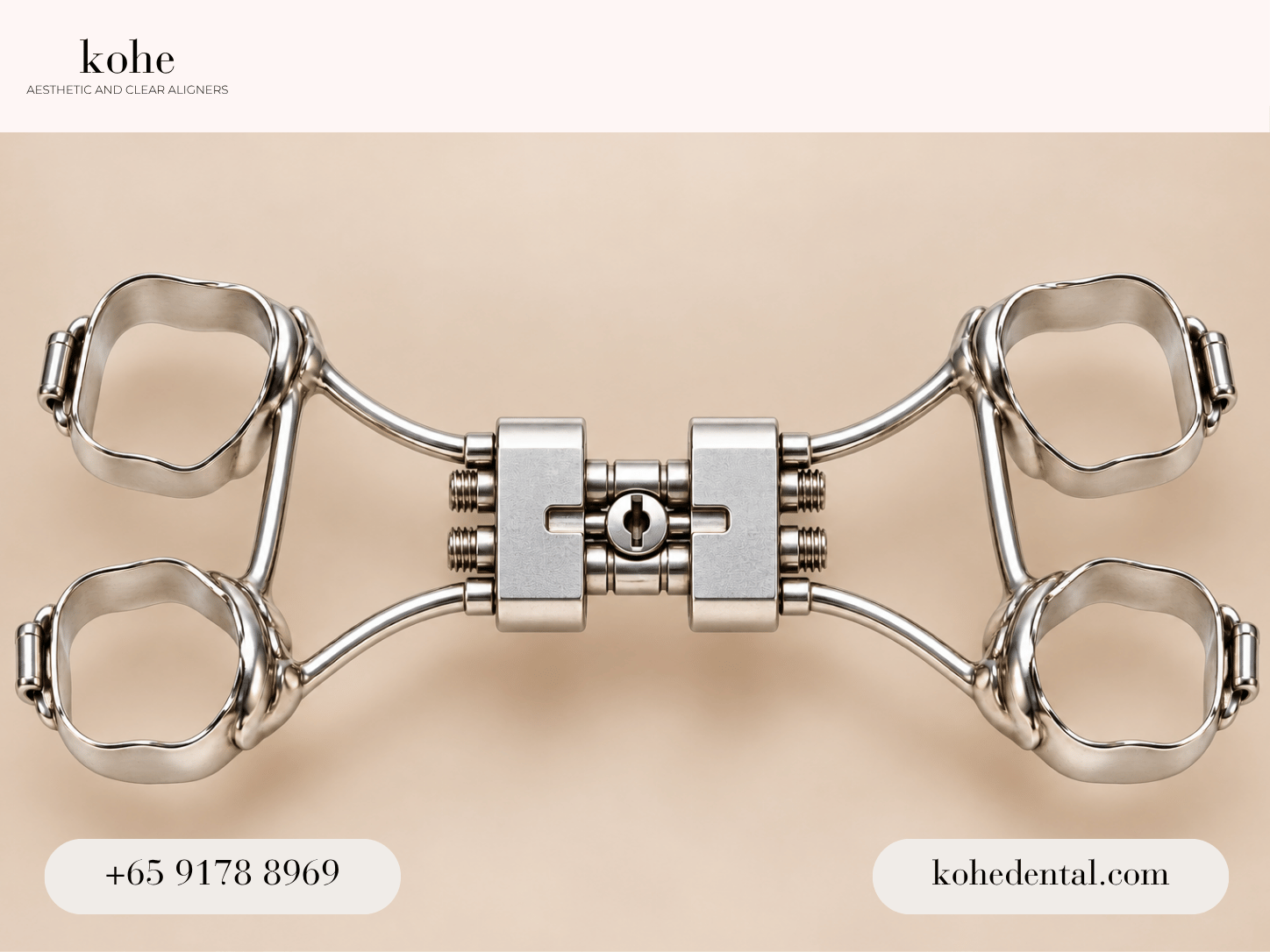
An RPE is a fixed appliance that gradually widens the upper jaw in growing children. It has a small central screw that is activated according to the dentist’s instructions to expand the palate.
Pros: Works effectively in growing children whose upper jaw bones are still developing.
Cons: May temporarily affect speech, eating and swallowing.
$1,928 ($2,101.52 with 9% GST)
Invisalign Palatal Expander
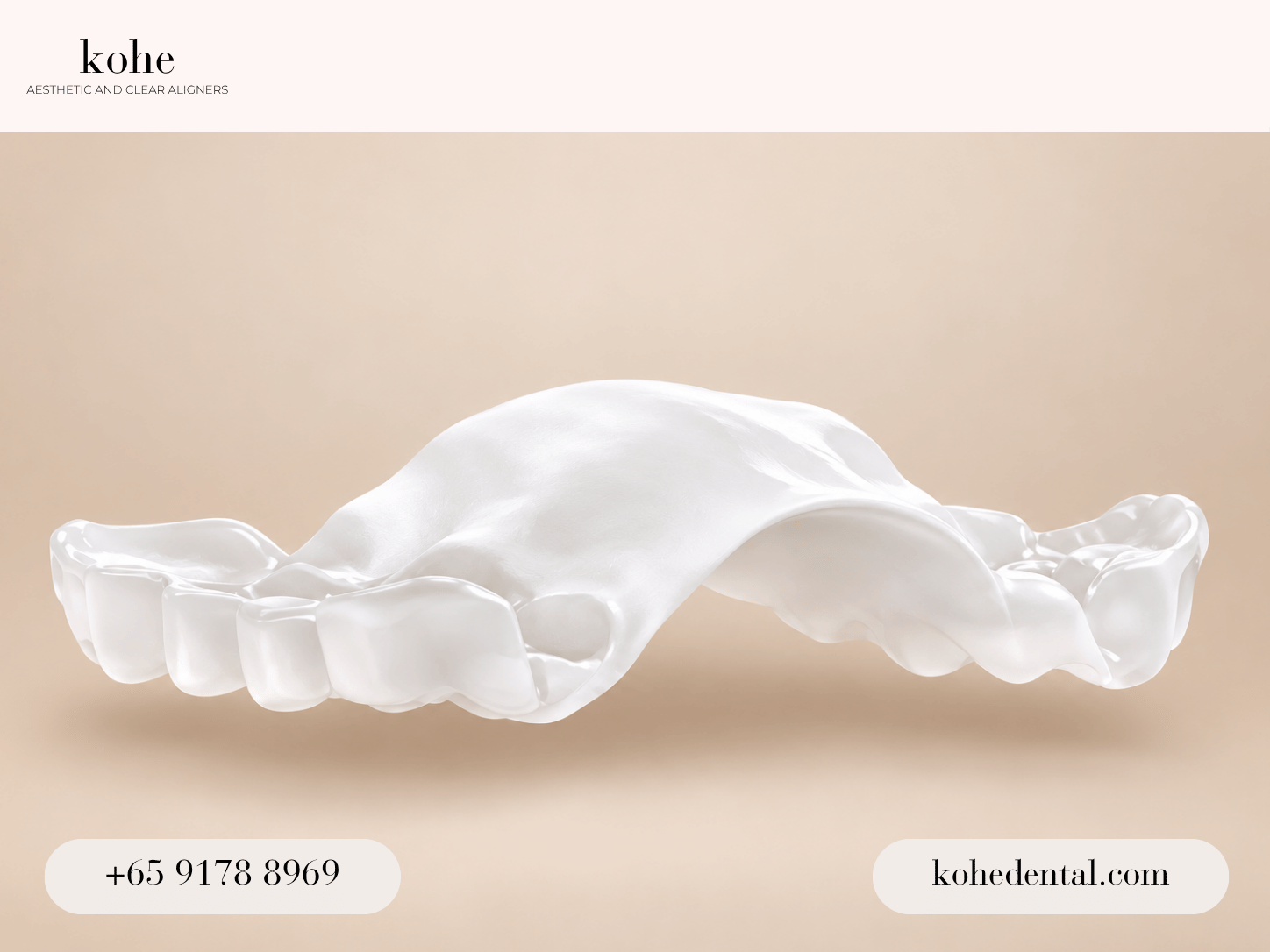
An Invisalign Palatal Expander consists of a series of custom-made, removable appliances that progressively widen the upper jaw in growing children. Each expander is designed to achieve a small amount of expansion before the child moves on to the next one.
Pros: A removable device that allows the child to eat, brush and floss with convenience.
Cons: Requires patient compliance to wear and change the appliance according to their dentist’s prescribed schedule.
$3,528 ($3,845.52 with 9% GST)
MARPE (Mini-Screw Assisted Rapid Palatal Expansion)
MARPE uses small screws anchored on the roof of the mouth to support an expansion device. The appliance applies controlled pressure to the two sides of the upper jaw, encouraging them to separate. New bone then forms in the space as the area heals and stabilises.
Pros: May allow older teenagers and adults to achieve jaw expansion.
Cons: Requires the placement of miniscrews in the palate, making it more invasive than conventional expansion methods.
Traditional Palatal Expander Treatment Journey at kohe™ Dental
When your child undergoes Traditional Palatal Expander (RPE) treatment at kohe™ Dental, you can expect clear, upfront pricing and complete treatment transparency, with no unexpected costs.
Our treatment coordinators will explain the costs involved before treatment begins, helping you make an informed decision about your child’s orthodontic care.
Through our partnerships with dental brands and suppliers, we strive to offer competitive pricing for RPE treatment, passing on cost savings to our patients without compromising the quality of care.
RPE treatment involves gradually widening the upper jaw to address issues such as a narrow dental arch, crossbite or insufficient space for developing teeth. As your child’s jaw and teeth respond to expansion, regular review appointments are essential to monitor progress and ensure that treatment is proceeding as planned.
Your dentist will also provide instructions on caring for the appliance and activating the expansion screw at home, where applicable. If the appliance becomes loose, damaged or uncomfortable, an additional assessment may be necessary.
Following expansion, the appliance is typically kept in place for a period of stabilisation. Depending on your child’s orthodontic needs, braces or clear aligners may subsequently be recommended to align the teeth and refine the bite.
At kohe™ Dental, we welcome both local and international patients, including families from Malaysia, Brunei, Indonesia, the Philippines, Thailand, Japan, Korea, the UAE, USA, UK and Sweden.
Here is what you and your child can expect throughout the Traditional Palatal Expander (RPE) treatment journey at kohe™ Dental:
1st Visit: Initial Consultation
Your child’s RPE journey at kohe™ Dental begins at our clinic located along Orchard Road. During your first consultation, your dentist will discuss your child’s dental concerns, medical history and any changes you have noticed in their teeth or bite.
Next, your dentist will conduct a clinical examination of your child’s teeth, gums and bite. They will also assess your child’s facial development, tongue posture and breathing patterns to understand their overall oral development.
This helps your dentist to determine whether a Traditional Palatal Expander is suitable for your child.
1st Visit: Scans and Imaging
Next, your dentist will use a 3D intraoral scanner to capture a detailed digital model of your child’s teeth and dental arches. Unlike traditional dental impressions, this process does not require impression trays filled with putty, making it more comfortable for your child.
Your dentist will also take photographs of your child’s smile, lips, and profile. Depending on your child’s needs, additional imaging such as an orthopantomogram (OPG) or lateral cephalometric X-ray (Lat-Ceph) may help assess jaw relationships and bone levels.
Together, these records give your dentist a complete picture of your child’s oral health and help them design a treatment plan that is tailored to their needs.
1st Visit: Diagnosis and Treatment Planning
After reviewing the findings, scans and imaging records, your dentist will explain your child’s orthodontic condition and whether a Traditional Palatal Expander is suitable.
Your dentist discusses the amount of expansion required, how the appliance works and what you and your child can expect from the treatment. They will also explain the benefits, limitations and potential risks of treatment, including whether your child will require braces or clear aligners later.
At the end of the appointment, you will be given an estimated treatment duration, an outline of the main phases, and a written quotation.
2nd Visit: Pre-Treatment Cleaning and Preparation
Before fitting the expander, your dentist will check that your child’s teeth and gums are healthy enough for the treatment.
Where necessary, your child may be scheduled for a pre-orthodontic scaling and polishing or Guided Biofilm Therapy session with our Oral Health Therapist. This preparatory step is crucial as it ensures the structures surrounding your child’s teeth are strong enough to support treatment.
3rd Visit: Placement of Traditional Palatal Expander
Once the appliance is ready, your dentist will carefully fit the expander onto your child’s upper teeth. The appliance sits across the roof of your child’s mouth and contains a small expansion screw in the centre.
Your dentist will check that the expander fits securely and comfortably before explaining how it works. As the RPE is a fixed appliance, your child will not have to remember to put it on or remove it each day.
You and your child will be given detailed instructions on cleaning around the appliance, choosing suitable foods and managing any initial discomfort. Your dentist will demonstrate how to activate the expansion screw if home activation is required.
Activation Phase: Gradual Expansion of the Upper Jaw
The activation phase is when expansion begins. Depending on your child’s treatment plan, you may need to turn the small screw in the centre of the appliance using a special key.
Each activation applies gentle, controlled pressure that gradually widens the upper jaw over time. Your dentist will provide clear instructions on how often to turn the screw and when to stop.
During the first few days, your child may feel some tightness or pressure across their upper jaw. However, as their mouth gets used to the device, the pain will subside. You may also notice a gap forming between your child’s front teeth. This is a good sign as it means their palate is expanding.
Follow-Up Visits: Monitoring and Adjustment
Throughout the activation phase, your dentist will schedule regular follow-up appointments to monitor your child’s progress. Depending on your child’s needs, your dentist may adjust the activation schedule or provide additional instructions for home care.
These appointments also provide you with an opportunity to raise concerns or ask questions about your child’s progress.
Final Phase: Stabilisation and Teeth Alignment
Once your dentist achieves the planned expansion, you will stop activating the screw. However, the appliance will remain in place for several months to allow new bone to form within the expanded palate and the surrounding tissues to stabilise.
After the stabilisation phase, your dentist will assess your child’s teeth to determine the next steps. This may include braces or clear aligners to straighten their teeth within the newly created space.
Traditional Palatal Expander Treatment Duration
The exact duration of RPE treatment varies from patient to patient, depending on age, jaw development, amount of expansion required and individual response to treatment.
On average, the expansion phase takes 2-6 weeks, while the stabilisation phase takes 3-6 months. After expansion, your child may require further orthodontic treatment such as braces or clear aligners to straighten their teeth and refine their bite.
Traditional Palatal Expander Cost in Singapore
Traditional Palatal Expander treatment at kohe™ Dental starts at $1,680 ($1,831.20 with 9% GST).
These fees cover the expansion phase of your child’s treatment. If your child requires braces or clear aligners after expansion, your dentist will discuss the recommended treatment with you and provide a separate quotation.
To view the breakdown of fees for expansion orthodontics at kohe™ Dental, please refer to the table below:
| Age Group | Cost | Cost with 9% GST | |
|---|---|---|---|
| Traditional Palatal Expander | Under 12 Years | $1,680 | $1,831.20 |
Financing Traditional Palatal Expander
If you are considering kohe™ Dental for RPE treatment, there are a few ways to finance your treatment to make it more affordable.
Baby Bonus
Use your CDA Baby Bonus for orthodontic treatment at kohe™ Dental.
kohe™ Dental is a Baby Bonus-certified dental institution.
All Major Banks
We accept interest-free instalment payments from all major banks.
Get up to 12 months interest-free instalments with your credit card. Please take note that for all transactions done with credit/debit cards, we charge a 3.4% + $0.20 surcharge (that Stripe charges us).
Dental and Corporate Insurance
We work with multiple dental and corporate insurance panels like Henner, Cigna International to provide more accessible orthodontic dental care to you.
Please take note that should you wish to use your dental insurance for dental or orthodontic treatments at kohe™ Dental, we will write a claims letter for you which you can then use to claim from your insurer.
Why Choose Expansion Orthodontics at kohe™ Dental?
- Affordable orthodontic treatment options
- Conveniently located on Orchard Road
- Child-friendly clinic
- Orthodontic-focused dentists who treat patients from childhood to mature adulthood
- Open on weekdays and weekends
- Extended opening hours until 7pm
- Experienced in managing complex orthodontic cases
- Prioritises non-extraction approaches where clinically suitable


Traditional Palatal Expander: Frequently Asked Questions
What is a Traditional Palatal Expander (RPE)?
A Traditional Palatal Expander is a fixed orthodontic appliance that widens the upper jaw in growing children. It helps create space for permanent teeth to erupt, correct certain crossbites and reduce crowding associated with a narrow upper jaw.
What is the best age for an RPE?
An RPE is best suited for growing children under 12 years. Your dentist will evaluate your child’s jaw development and skeletal maturity before recommending treatment.
How do I know if my child needs an RPE?
Your child may need an RPE if they have crowding, a narrow upper dental arch, certain crossbites or insufficient space for permanent teeth. Your dentist will assess your child’s teeth, bite, jaw development and growth to determine whether expansion is appropriate.
How does a Traditional Palatal Expander work?
A Traditional Palatal Expander is a fixed device with a small screw and is attached to the upper teeth. You will activate the screw according to your dentist’s instructions, gradually widening the upper jaw. Once your child achieves the planned expansion, the device remains in their mouth for several months for new bone to form and the surrounding tissues to stabilise.
Does an RPE hurt?
During the first few days or after activating the appliance, your child may experience mild pressure or tightness around their upper teeth and palate. You may also notice temporary changes in their speech, chewing or swallowing. These symptoms usually improve once your child gets used to the appliance. If the pain persists or worsens, contact your dentist immediately.
Why is there a gap between my child’s front teeth after starting RPE treatment?
A temporary gap between your child’s front teeth is a sign that their upper palate is expanding. This is common during RPE treatment, although not all children will develop a visible gap. The space may reduce naturally as their teeth shift or during subsequent orthodontic treatment.
How long does my child need to wear a Traditional Palatal Expander?
Treatment duration varies from patient to patient, depending on your child’s age, jaw development, amount of expansion required and response to treatment. On average, the expansion phase takes 2-6 weeks while the stabilisation phase takes 3-6 months. Your dentist will provide an exact timeline based on your child’s needs and progress.
Can a Traditional Palatal Expander prevent extractions before braces?
Traditional Palatal Expanders create additional space for crowded teeth and may reduce the need for extractions in suitable cases. However, some patients may still require extractions depending on their jaw structure, degree of crowding and overall orthodontic needs.
Will my child need braces after RPE treatment?
Some children may require braces or clear aligners after RPE treatment to realign their teeth and refine their bite. Others may only require monitoring as their adult teeth erupt. Your dentist will assess your child’s needs before determining whether further orthodontic treatment is required.
What is the difference between a Traditional Palatal Expander and an Invisalign Palatal Expander?
Both a Traditional Palatal Expander (RPE) and an Invisalign Palatal Expander (IPE) can widen the upper jaw in growing children. However, their exact mechanisms differ.
An RPE is a fixed orthodontic device that uses a small screw to gradually widen the upper palate. An IPE uses a series of custom-made, removable expanders to achieve expansion.
A detailed assessment by a dentist is required to determine the most suitable option for your child.