Many patients are interested in clear aligner treatment, but hesitate to visit a dental clinic just to find out the cost. A clear aligner photo assessment can help.
Before committing to a consultation, most people like yourself, might want to know the practical details first: How much will it cost? How long will treatment take? Is my case simple or complex? Will I need many sets of aligners? How many sets of aligners do I actually need? Are there any dental issues I need to settle before starting?
This is where a dentist-driven photo assessment can be helpful.
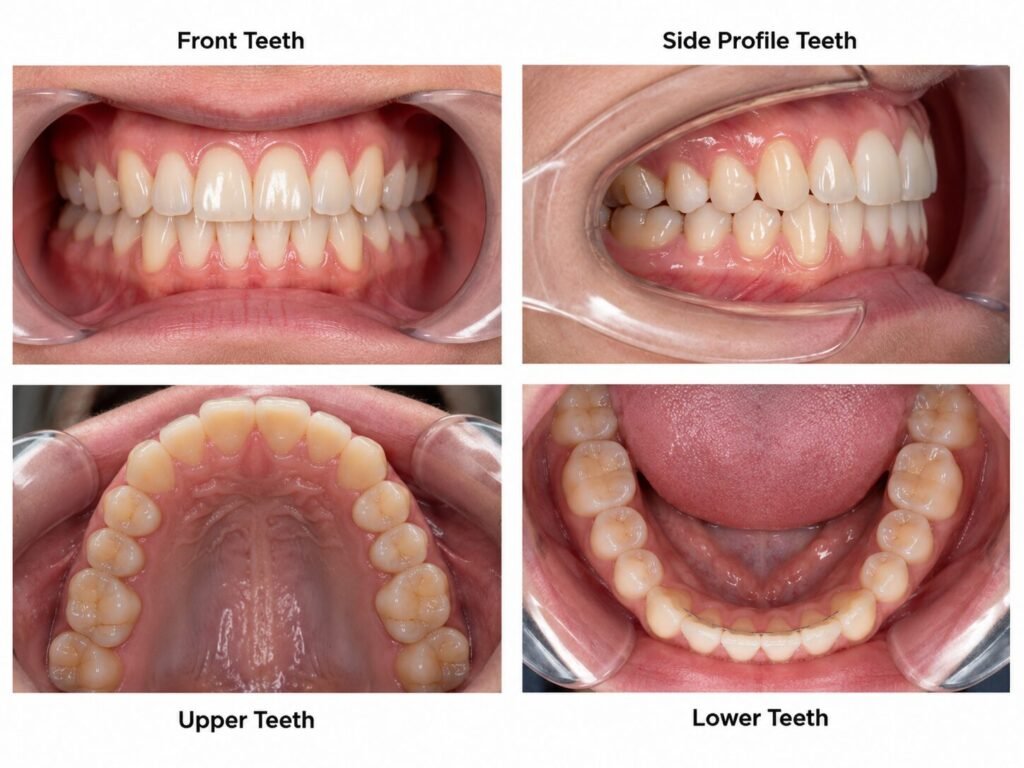
By reviewing just a few clear photos of your teeth (the front teeth, the side profile teeth, the upper teeth and the lower teeth), a clear aligner dentist like myself can often provide an early indication of what your clear aligner journey may involve.
While photos cannot replace a full clinical examination, 3D scans, or X-rays, they can help identify visible factors that affect treatment planning, cost, and duration. The final cost of clear aligners are entirely dependent on how many sets of clear aligners you need, which is determined by how complex your tooth movements are.
These may include your current oral hygiene, possible gum issues, visible tooth decay, spacing, crowding, rotated teeth, protrusive teeth, jaw asymmetry, or a deviated dental midline.
For patients who feel unsure about taking the first step, a photo assessment can make the process feel less intimidating. It gives you a clearer idea of the likely budget, treatment timeline, and complexity of your case before you decide whether to proceed with an in-clinic consultation.
In this guide, we explain what a dentist can assess from 4 simple photos, what affects your clear aligner treatment cost, and how to request a more accurate dentist-led smile assessment.
- 1. Your Current Oral Hygiene
- 2. Whether You Have Gum Disease or Gum Issues
- 3. Whether You Have Demineralised Teeth or Dental Caries
- 4. Identify Missing Teeth, Baby Teeth or Teeth That Have Not Grown In
- 5. Spot Restorations Such As Dental Implants, Dental Crowns, and Dental Bridges
- 6. See Whether Expanders Can Be Used Instead of Extracting Healthy Teeth
- 7. Your Current Orthodontic Alignment or Misalignment
- 8. How Many Sets of Clear Aligners You Might Need
- 9. Whether You Need Additional Orthodontic Appliances Like TADs
- 10. A Comprehensive Treatment Plan Before Visiting the Dentist in Clinic
- Request an Accurate Dentist-Driven Clear Aligner Photo Assessment
1. Your Current Oral Hygiene
With the photos, the dentist will first look at the current condition of your oral hygiene.
This is because clear aligners like Invisalign and Angel Aligner sit closely over your teeth for 20 to 22 hours a day. If plaque, calculus, or food debris are already present, wearing aligners over them may increase the risk of gum inflammation, bad breath, tooth decay, and staining.
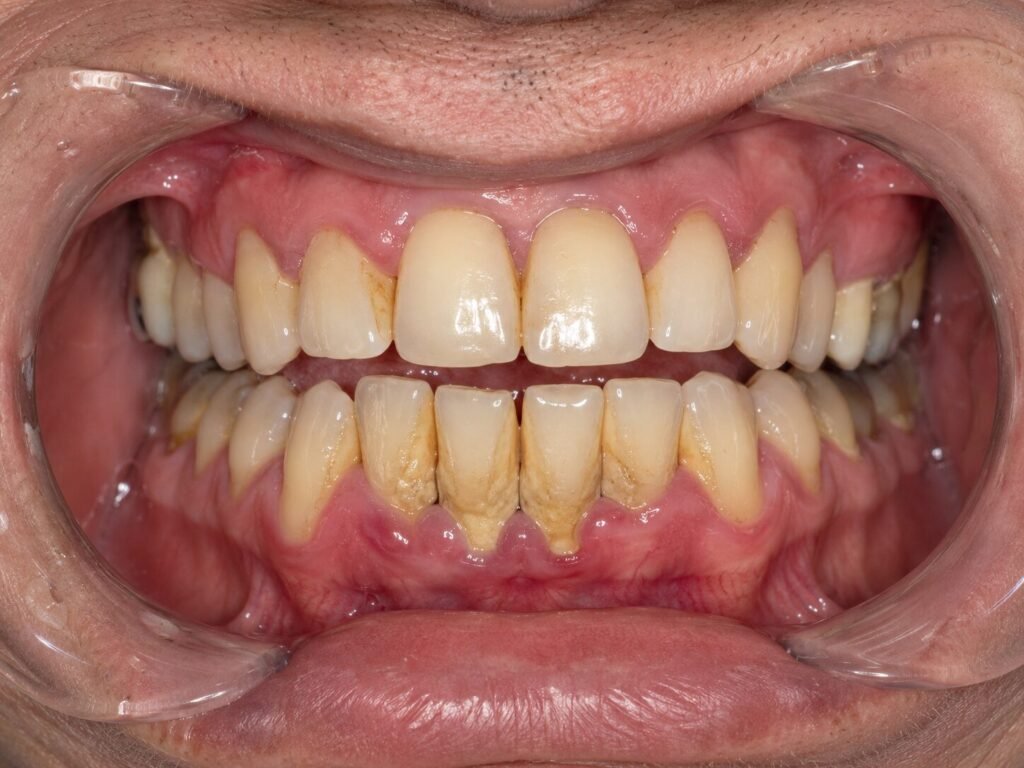
From clear photos, we might be able to spot visible plaque buildup around the gumline, calculus deposits behind the lower front teeth, swollen gums, or areas that appear inflamed.
While a photo assessment cannot replace a professional dental examination, it can give an early indication of whether your teeth and gums are ready for aligner treatment or whether you may need cleaning and oral hygiene improvement first.
Good oral hygiene is important because orthodontic treatment works best in a healthy mouth. If the gums are inflamed or the teeth are not being cleaned well, your dentist may recommend improving your brushing and flossing routine before starting treatment. At kohe™ Dental, a professional scaling and polishing appointment is advised before your clear aligners are fitted.
The photos also give us the opportunity to provide simple oral hygiene tips based on what can be seen in your photos. This may include brushing more carefully along the gumline, cleaning between the teeth with floss or interdental brushes, using a suitable mouth rinse where appropriate, and keeping aligners clean throughout the day.
The goal is not to delay treatment unnecessarily. It is to make sure your teeth and gums are in the best possible condition before movement begins. A clean, healthy mouth helps clear aligner treatment feel more comfortable, reduces avoidable complications, and supports a more predictable result.
2. Whether You Have Gum Disease or Gum Issues
From photos, we may be able to identify visible signs such as swollen gums, bleeding-prone areas, gum recession, redness around the gumline, tartar buildup, or teeth that appear to have reduced gum support.
This is one of the most important parts of treatment planning because orthodontic movement should only be carried out when the teeth are supported by healthy gums and stable bone.
Clear aligner treatment should generally not proceed when active gum disease or unresolved gum issues are present. If gum inflammation or periodontal disease is suspected, your dentist may recommend gum treatment first.
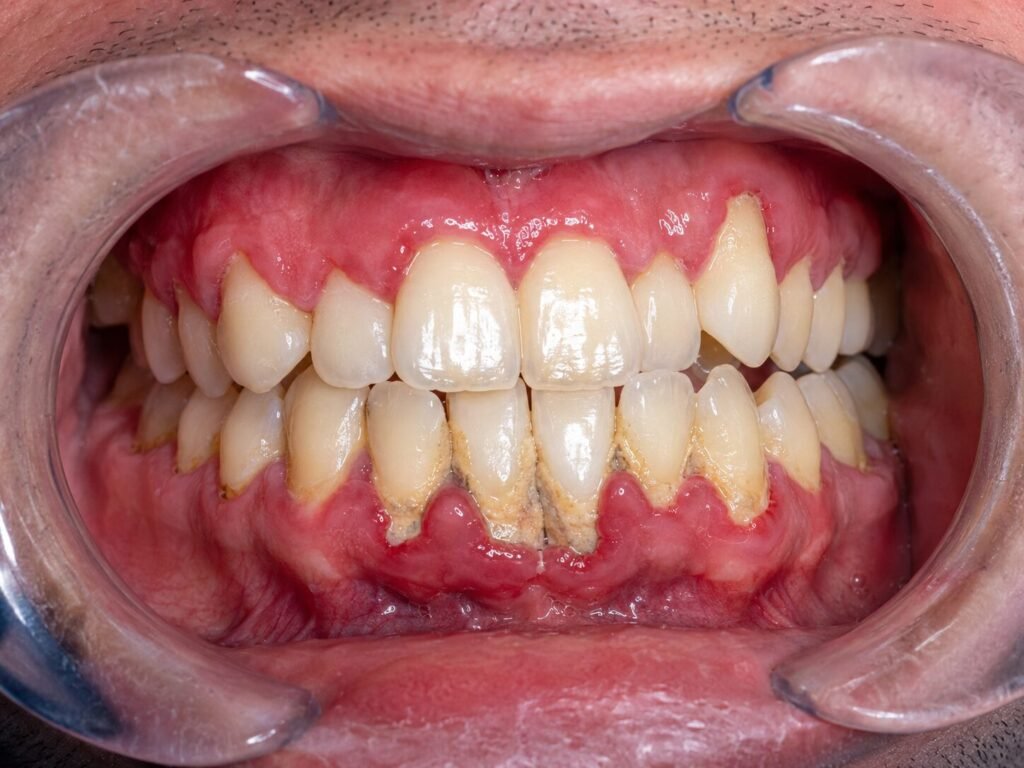
This may include professional cleaning, deep cleaning, root planing, or referral for periodontal care where necessary. The goal is to stabilise the gums before any tooth movement begins.
Proceeding with clear aligner treatment while gum disease is active can increase the risk of complications. These may include worsening gum recession, bone loss, loose teeth, increased tooth mobility, and in severe cases, tooth loss. This is why gum health should be treated seriously, even if you are excited to begin aligner treatment quickly.
Poor gum health may also be linked to broader health factors. In some patients, especially mature adults considering clear aligners, it may be important to review medical history before starting treatment. Conditions such as diabetes, immune-related concerns, smoking history, certain blood thinning medications, or long-standing inflammation may affect gum health and healing response.
A dentist-led photo assessment can help flag possible gum concerns early, so you understand whether your mouth is ready for clear aligners or whether gum stabilisation should come first. This protects not only your smile outcome, but also the long-term health of your teeth.
However, photos alone cannot fully diagnose gum disease. A proper clinical assessment, gum measurements, X-rays, and review of your dental history may still be needed before treatment can safely begin.
3. Whether You Have Demineralised Teeth or Dental Caries
Photos can help us see whether there are signs of demineralised teeth or dental caries. This is important because during clear aligner treatment, the clear aligners are worn over teeth for a prolonged period of time.
If there is already weakened enamel or untreated decay, the condition may worsen during treatment if it is not managed properly first.
From photos, we may be able to identify early warning signs. White chalky spots on the teeth may suggest areas of enamel demineralisation, where minerals have been lost from the tooth surface. These areas may be more vulnerable to decay if oral hygiene, diet, or saliva protection is not well managed.
Darkened spots, holes, shadowing, or stained grooves on the teeth may indicate possible dental caries, especially if they are seen in deep pits, between teeth, or around old fillings.
Dental caries should be treated before clear aligner treatment begins. Moving teeth while decay is present can complicate treatment. Some patients develop tooth sensitivity and even pain from delaying restorative treatment. Delaying treatment and heading directly to aligners can lead to more extensive and expensive restorative work later.
In simple cases, a dental filling may be sufficient. However, if the tooth has deep grooves, larger cavities, cracks, or weakened structure, your dentist may recommend an inlay or onlay instead of a standard dental filling. This may help protect the tooth more effectively and reduce the risk of further enamel breakdown.
In more advanced cases, where decay has reached deeper into the tooth and affected the nerve, root canal treatment may be required before orthodontic movement can safely proceed. At kohe™ Dental, MTA may be used in selected root canal treatment procedures. MTA is a dental material commonly used in endodontic care to heal inflammation and prolong the longevity of your natural tooth.
A photo assessment can help flag these concerns early, so you know whether your teeth are ready for clear aligners or whether restorative treatment should be completed first. This protects your teeth before movement begins and helps create a healthier foundation for your clear aligner journey.
4. Identify Missing Teeth, Baby Teeth or Teeth That Have Not Grown In
From your photos, we are able to identify visible gaps, smaller baby teeth that remain in place, uneven tooth sizes, or areas where a tooth appears to be missing.
These details are important because they can significantly affect how your teeth should be moved, how your bite should be planned, and how long treatment may take.
If an adult patient still has retained baby teeth, these teeth may sometimes need to be extracted before or during orthodontic treatment. This depends on the condition of the baby tooth, whether there is an adult tooth underneath, and whether keeping the baby tooth would affect the final bite or alignment.
We will also be able to assess whether the space should be closed, maintained, or restored later with options such as an implant, bridge, or other tooth replacement solution.
Missing teeth can also change how clear aligners are planned. Consideration needs to be given on how to move the surrounding teeth safely so that the bite remains balanced and the upper and lower teeth can meet properly. If extractions are needed, the treatment plan must also account for how the spaces will be closed and how long that movement may take.
A photo assessment can help give an early indication of these factors. This allows us to provide a more realistic estimate of your treatment complexity, expected duration, and whether additional procedures may be needed before starting clear aligners.
However, photos alone cannot confirm whether a tooth is truly missing, impacted, or still developing under the gums. In these cases, X-rays may be needed to assess the position of the roots, whether there is a supernumerary tooth, and whether there are any teeth that have not erupted.
5. Spot Restorations Such As Dental Implants, Dental Crowns, and Dental Bridges
A photo assessment can help us identify visible restorations and consider whether clear aligner movement may affect them. At kohe™ Dental, we try to be as minimally invasive as possible when it comes to working with existing restorations during clear aligner treatment.
The goal is to plan treatment carefully while avoiding unnecessary damage to existing dental work with the most minimally invasive approach possible. This helps protect your previous dental investment and natural teeth, while working towards better alignment and bite function.
If during the photo assessment, we find that you have existing dental restorations such as dental implants, crowns, bridges, veneers, or large fillings, we will provide relevant suggestions as restored teeth do not always respond to orthodontic movement in the same way as natural teeth.
Dental implants, for example, are screwed into your jaw. Unlike natural teeth, they cannot be moved with braces or clear aligners. If you have an existing dental implant, your dentist will need to plan tooth movement around it. This may affect how your bite is corrected, how gaps are closed, and how your final alignment is achieved or looks.
Dental crowns and dental bridges also need careful assessment. In some cases, crowns or bridges may interfere with the planned tooth movement. A dental bridge connects multiple teeth together, which means the teeth involved may not be able to move independently unless the bridge is sectioned, modified, or removed. This is not always necessary, but it must be considered before treatment begins.
For patients with crowns on their front teeth, clear aligners may sometimes be preferred over fixed braces. Braces rely on brackets being bonded securely to the tooth surface. If a front tooth has a crown, bonding may be less predictable, and there may be less reliable anchorage compared to a natural tooth. Clear aligners can sometimes provide a more suitable and conservative option, depending on the case.
6. See Whether Expanders Can Be Used Instead of Extracting Healthy Teeth
From photos, we may be able to identify signs of a narrow arch, such as crowded front teeth, teeth that appear pushed forward, a constricted smile, or an upper arch that does not seem broad enough to support the teeth comfortably.
This is important because some cases of overcrowding, protrusion, or bite imbalance can be caused by a lack of space in the upper jaw or dental arch. It is not simply a case of “too many teeth.”
At kohe™ Dental, our treatment philosophy is to protect healthy and natural teeth wherever clinically possible.
Instead of removing healthy teeth immediately to create space, we take into account other factors like whether expansion can help widen the arch and create a better foundation for alignment. This may be especially relevant in children, teenagers, and selected adults.
For children below the age of 11, options such as Invisalign Palatal Expanders or Rapid Palatal Expanders (RPE) may be considered where suitable.
For older children, young adults, and adults, MARPE, also known as miniscrew-assisted rapid palatal expansion, may be explored in selected cases to support upper jaw expansion.
Expansion may help reduce the need for extractions in suitable patients. This matters because every natural tooth contributes to chewing function, bite support, facial structure, and long-term oral stability.
Removing teeth unnecessarily may affect smile fullness, facial profile, bite balance, and in some cases, may contribute to a more recessed or collapsed appearance over time.
A narrow upper arch may also be linked to broader concerns such as poor tongue space, mouth breathing, or airway-related issues.
Please take note that this does not mean every patient with a narrow arch has an airway problem, but it does mean that thorough assessment of your bite, facial profile, breathing habits, and growth patterns is required before treatment planning begins.
A photo assessment can help flag whether expansion may be worth considering. The goal is not to avoid extractions at all costs, but to make sure they are only recommended when truly necessary. Where possible, the priority is to create space conservatively, preserve healthy teeth, and plan a result that supports both appearance and long-term oral function.
While photos cannot replace a full orthodontic assessment, they can help determine whether expansion should be explored before considering extractions.
7. Your Current Orthodontic Alignment or Misalignment
By looking at your photos, we may be able to get an early indication of whether your bite falls into a Class 1, Class 2, or Class 3 pattern.
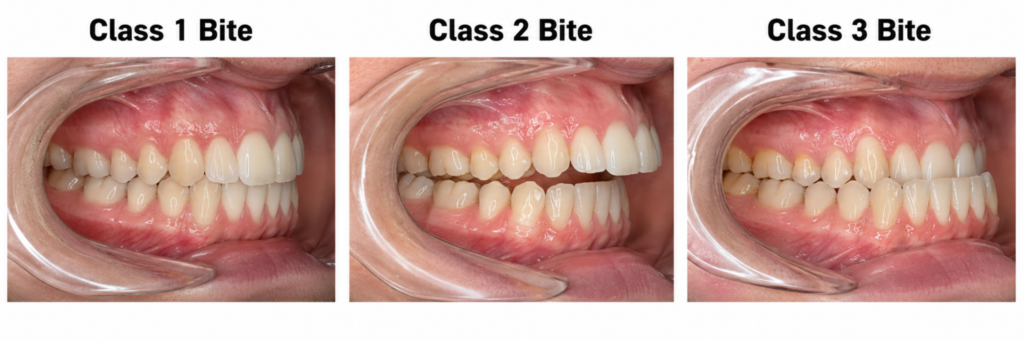
We are also able to spot visible concerns such as crowding, spacing, protrusion, rotated teeth, crossbite, deep bite, open bite, or a deviated midline. This helps put a clearer name to the orthodontic concern you want to correct.
Orthodontic treatment is more than just “straight teeth” or correcting crooked teeth.
Knowing all these matters because you get an educated idea of the extent of misalignment you have. Many patients assume they only have mild misalignment when there may be underlying bite issues.
For example, a patient may think their front teeth are slightly crooked, but a dentist may notice a crossbite, rotated molars, uneven bite contact, or jaw alignment concern. These issues can affect not only appearance, but also oral hygiene, chewing patterns, tooth wear, gum stability, and long-term bite balance.
Understanding your orthodontic misalignment also helps your dentist provide a more realistic estimate of your treatment duration and the likely number of aligners required. A mild spacing case may require fewer aligners, while a case involving crowding, bite correction, rotations, or jaw-related asymmetry may require a longer treatment timeline.
At kohe™ Dental, the high volume of orthodontic cases seen allows the team to draw from extensive clinical experience when assessing likely treatment complexity. In some cases, we may also be able to advise whether refinements may be expected. Refinements are additional sets of aligners used after the first treatment sequence to improve the final alignment, bite, or detailing.
A photo assessment can therefore help you understand what category your case may fall under, what issues may need to be corrected, and what kind of treatment journey you should realistically prepare for.
Overcrowded teeth
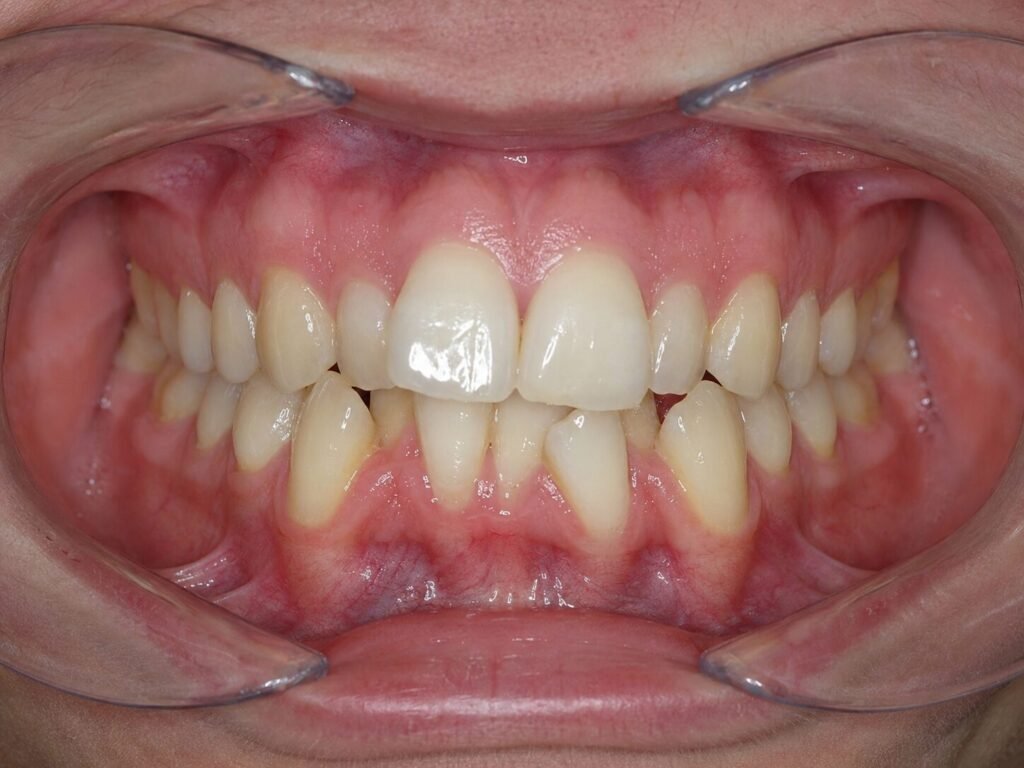
Overcrowded teeth happen when there is not enough space in the jaw for all teeth to sit neatly. Teeth may overlap, twist, or appear pushed out of position.
A photo assessment can help identify whether the crowding looks mild, moderate, or complex, and whether expansion, interproximal reduction, extractions, or additional appliances may need to be considered. It also helps estimate the likely treatment duration and number of aligners needed.
Crooked teeth
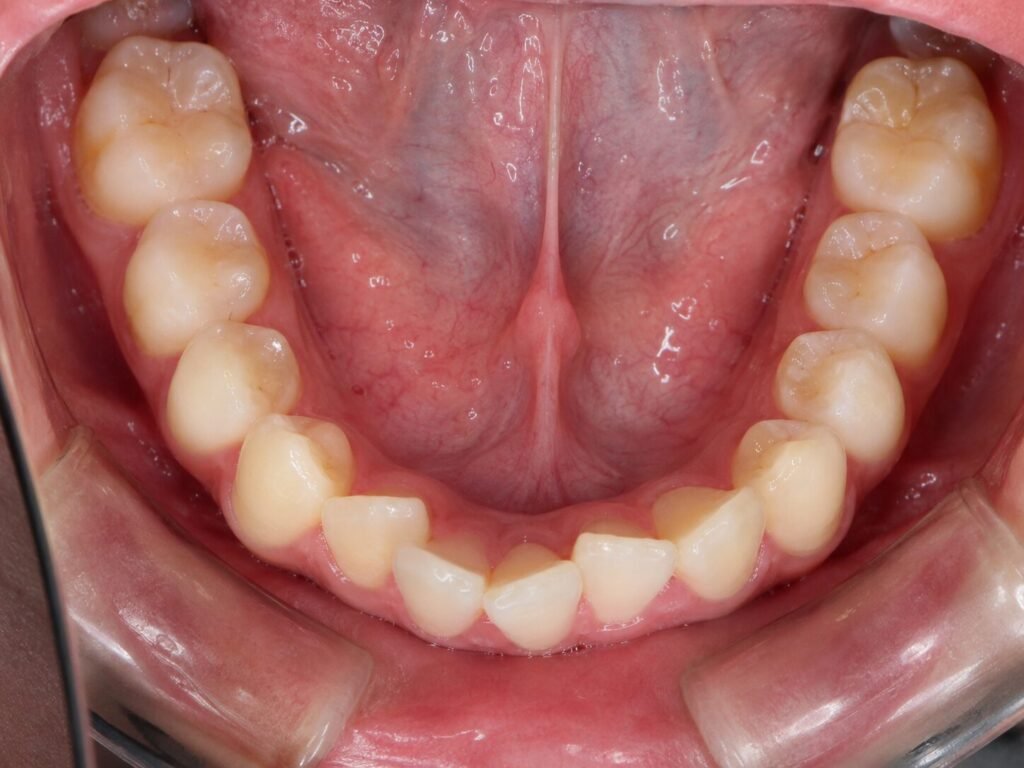
Crooked teeth refer to teeth that are not aligned evenly within the dental arch. Some teeth may lean forward, backward, or sideways.
From clear photos, a dentist can assess which teeth are visibly out of position and whether the concern appears mainly cosmetic or linked to a deeper bite issue. This helps provide an early estimate of whether clear aligners may be suitable and how much movement may be required.
Rotated teeth
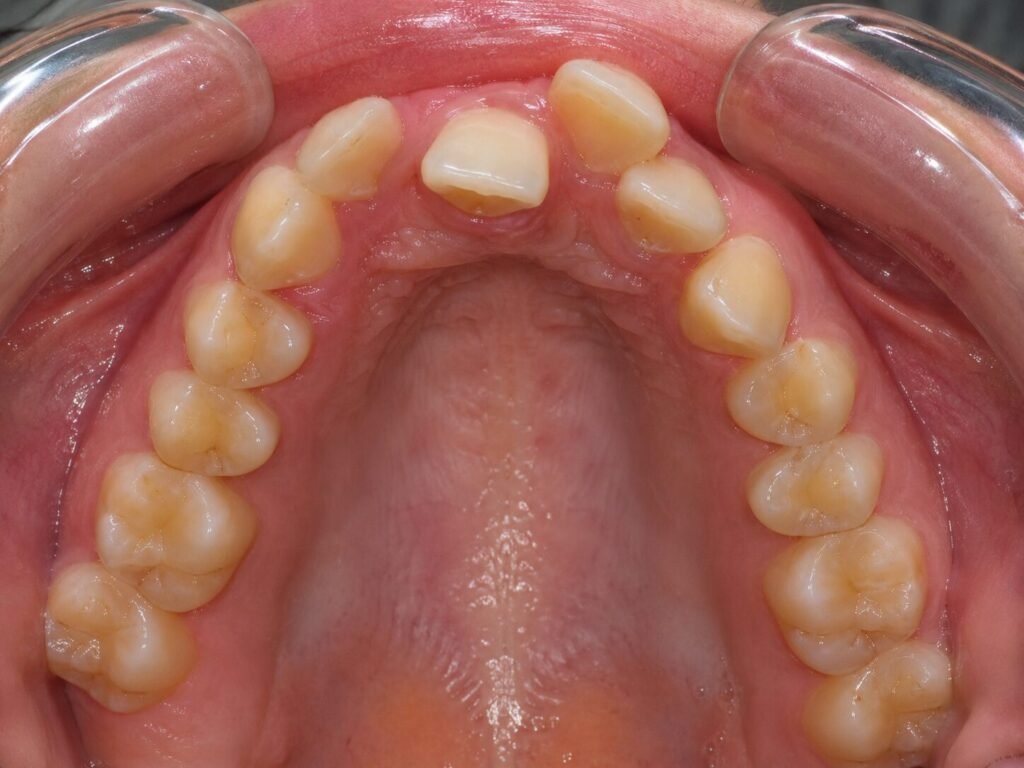
Rotated teeth are teeth that have turned from their ideal position. This is common with premolars, canines, and molars, and may affect both appearance and bite function.
A photo assessment can help identify which teeth are rotated and whether the rotation appears mild or more difficult to correct. More severe rotations may require more aligners, attachments, refinements, or additional orthodontic support to guide the tooth predictably.
Gaps in teeth
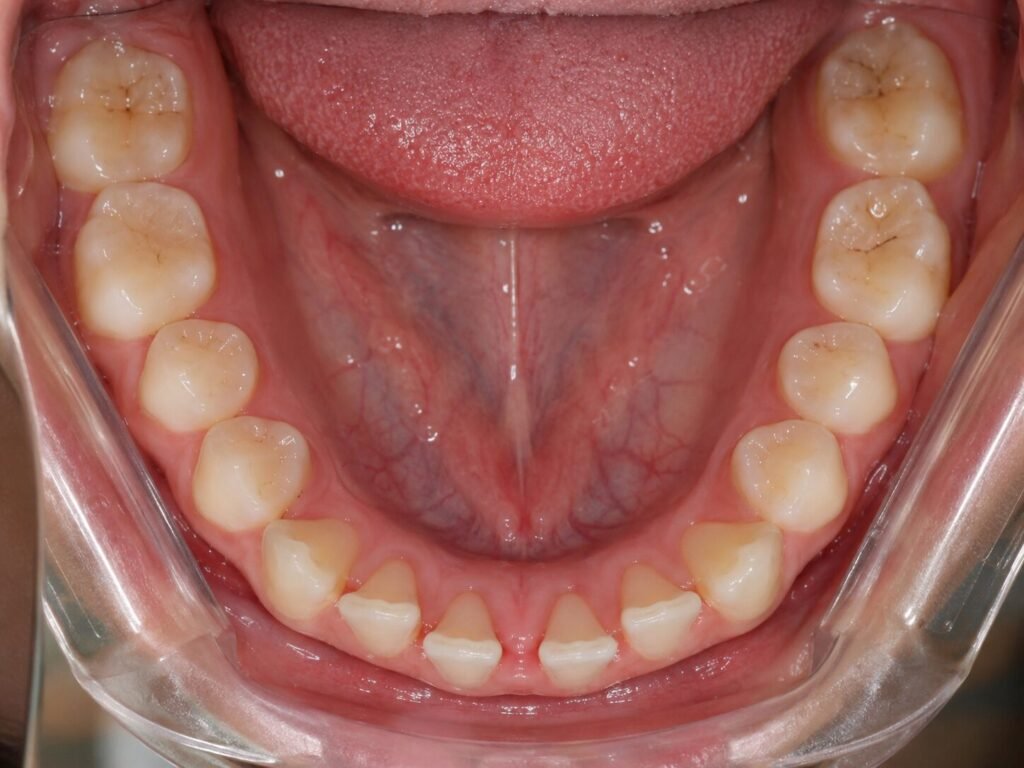
Gaps in teeth, also known as spacing, occur when there are visible spaces between the teeth. This may be due to small tooth size, missing teeth, gum issues, habits, or natural jaw spacing.
Photos can help assess where the gaps are, how large they appear, and whether space closure may be straightforward. If gaps are caused by missing teeth, retained baby teeth, or bite issues, further assessment may be needed.
Protrusive teeth
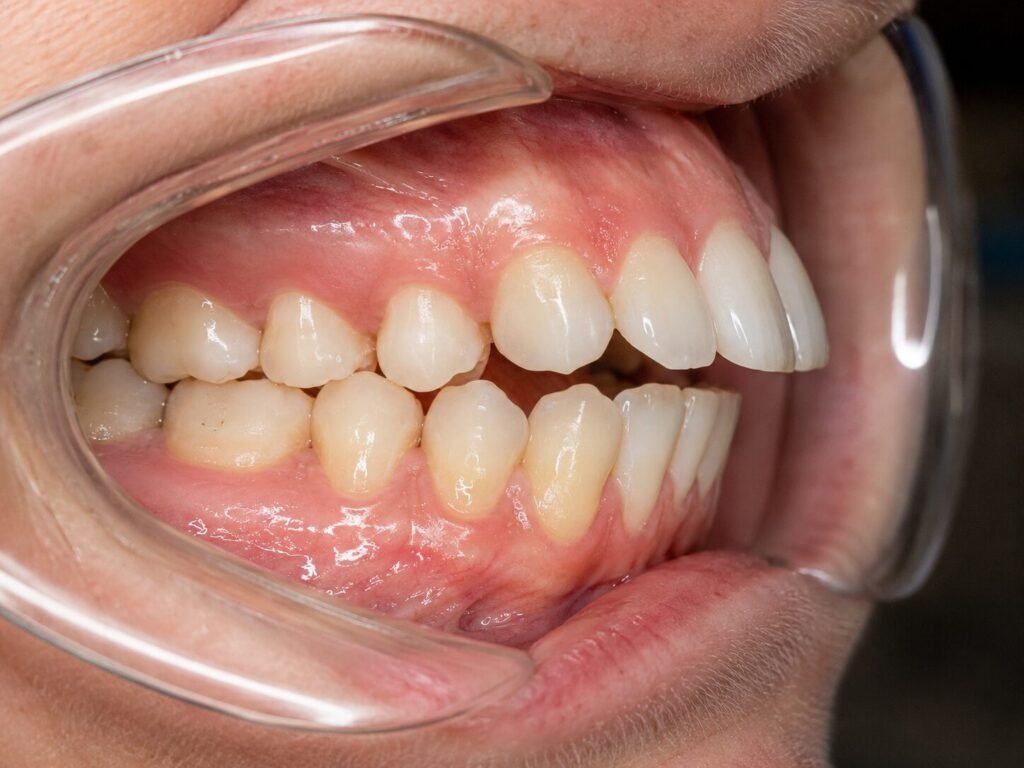
Protrusive teeth are teeth that appear pushed forward or angled outward. This can affect the side profile, lip support, bite comfort, and smile appearance.
From photos, we may be able to assess whether the protrusion appears dental, jaw-related, or linked to crowding and narrow arches.
This helps determine whether aligners alone may be suitable, or whether expansion, elastics, TADs, or extraction planning may need to be considered.
Asymmetrical jaw
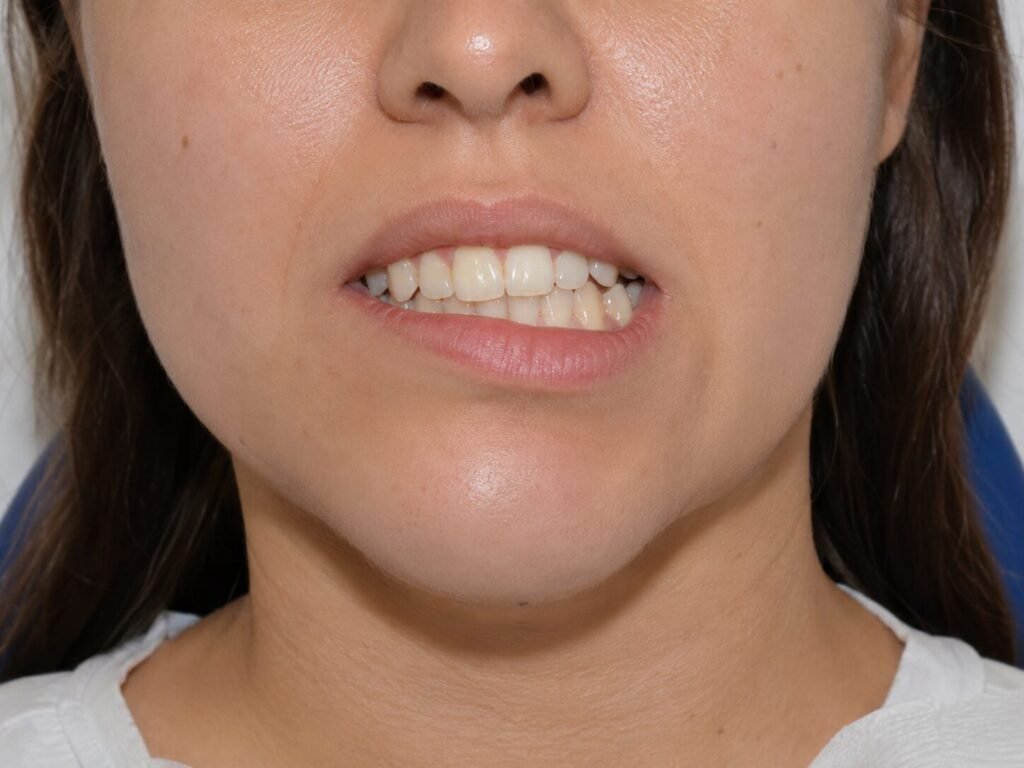
An asymmetrical jaw may show as an uneven bite, shifted smile, chin deviation, or one side of the teeth meeting differently from the other.
Photos can help flag visible signs of asymmetry, especially from front-facing and bite photos. However, jaw asymmetry often requires a full clinical assessment, X-rays, and bite analysis.
A photo assessment helps identify whether the case may be simple tooth alignment or a more complex jaw and bite-related concern.
Deviated midline
A deviated midline happens when the centre line of the upper teeth, lower teeth, or both does not align with the centre of the face.
This can be caused by crowding, missing teeth, uneven bite, previous extractions, or jaw asymmetry.
A photo assessment can help identify whether the midline appears shifted and whether the correction may be minor or more complex. This can affect treatment duration, aligner planning, and whether elastics or additional appliances may be needed.
8. How Many Sets of Clear Aligners You Might Need
One of the most useful information we can estimate from your photos is how many sets of clear aligners you may need.
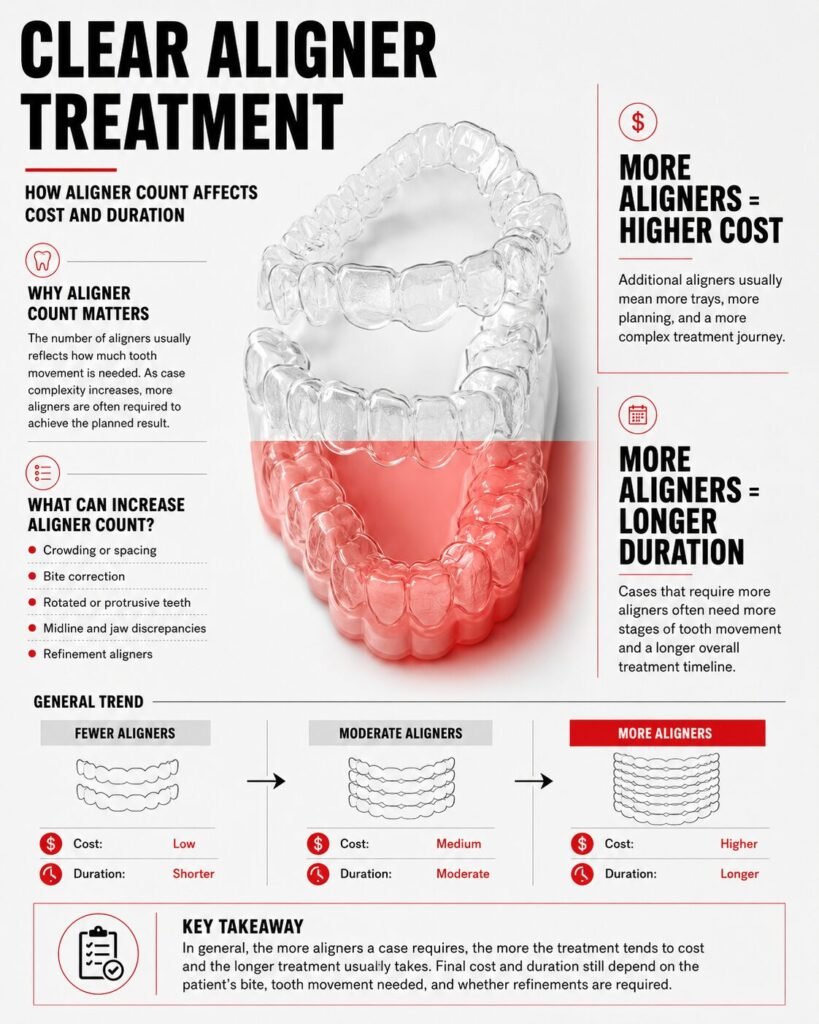
In many cases, this matters to patients because they are not keen on an extensive treatment plan. The number of aligners affects both the cost of treatment and the duration of treatment.
In general, simpler cases require fewer aligners. These may include mild spacing, minor crowding, or small alignment corrections where the teeth only need limited movement.
More complex cases usually require more aligners because the teeth need to move across a longer distance or in a more controlled sequence. This may include moderate to severe crowding, rotated teeth, protrusion, bite correction, crossbite, deep bite, or cases that require expansion or refinements.
The more aligners required, the longer the treatment timeline may be. This is why a photo assessment can be helpful before your first consultation. It gives you an early idea of whether your case is likely to be short, moderate, or longer in duration, and whether the treatment fee is likely to fall within your budget.
Prolonged orthodontic treatment can be costly and you might require some time to plan your finances or even decide whether or not you are ready to make an investment in your orthodontic care.
Knowing your treatment duration can be especially important if you are planning for a wedding, graduation, public-facing career milestone, photoshoot, or major life event. If you have a fixed deadline, we can assess whether meaningful improvement is possible within that timeframe and whether your expectations are realistic.
In selected cases, treatment may be safely accelerated with a PBM device, also known as an orthodontic accelerator. However, successful orthodontic acceleration is dependent on the type of tooth movement required, your oral health, gum condition, and overall treatment plan. Some cases can move faster, while others require more time to protect your teeth, roots, gums, and bite stability.
A dentist-led photo assessment helps you understand not just the estimated number of aligners, but also the likely pace of treatment. The goal is to move teeth efficiently, but not recklessly. A safe and predictable clear aligner plan should balance speed, cost, comfort, and long-term stability.
9. Whether You Need Additional Orthodontic Appliances Like TADs
From photos, we are able to identify signs that additional appliances could be needed. These may include jaw deviation, an underbite, overbite, crossbite, severely rotated teeth, tilted molars, or teeth that are leaning into spaces.
While clear aligners can be highly effective for many alignment concerns, some tooth movements require extra anchorage, force direction, or control to achieve a predictable result. In these cases, aligners may still be part of the treatment plan, but they may need to be supported by other orthodontic tools.
One example is TADs, also known as temporary anchorage devices. TADs may be used in selected cases to provide additional anchorage and controlled force, especially where more complex tooth movement is needed. They can help manage cases involving bite correction, jaw asymmetry, significant protrusion, or teeth that need to be moved in a more precise direction.
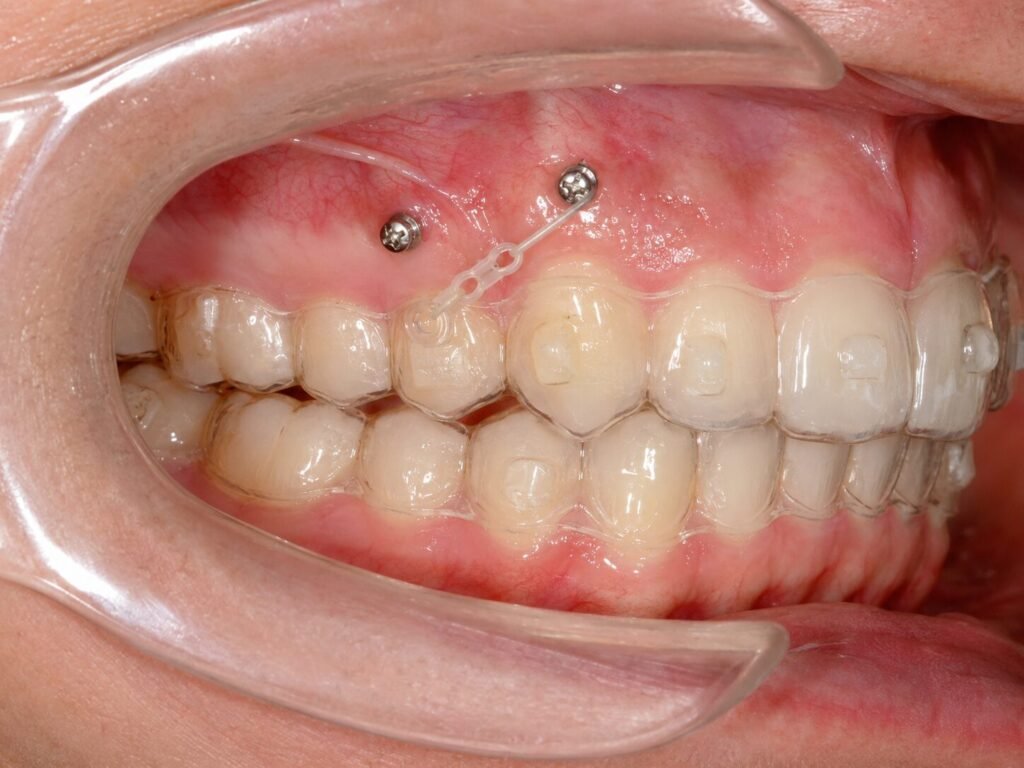
Your dentist may also plan buttons with elastics to help correct bite issues such as mild to severe crossbite, overbite, underbite, or jaw deviation. These small attachments allow elastics to apply directional forces that aligners alone may not be able to achieve efficiently.
In some cases, more specialised appliances may be needed. For example, a gold chain may be used to help upright a molar tooth.
Other appliances can be used to guide a tooth into a better position, or manage teeth that are tilted, impacted, or facing into another tooth. Additional planning may also be required for teeth that are severely rotated or difficult to move predictably with aligners alone.
A photo assessment can help flag whether your case is likely to be straightforward or whether additional orthodontic appliances may be required. This is important because these appliances can affect your treatment timeline, cost, appointment frequency, and overall complexity.
The goal is not to make treatment more complicated than necessary. It is to ensure that the right tools are used for the right movement. When planned properly, additional orthodontic appliances can help improve treatment precision, reduce unnecessary compromises, and support a more stable final bite and smile.
10. A Comprehensive Treatment Plan Before Visiting the Dentist in Clinic
A photo assessment can provide you with an educated point of view before you decide to visit the clinic in person.
For many of the patients we see at kohe™ Dental, this first step can make clear aligner treatment feel less intimidating because you are not walking in blindly.
Instead of booking a consultation without knowing what to expect, you can first receive a preliminary understanding of your case, possible treatment needs, estimated budget, and rough timeline.
From your photos, we are able to identify visible factors that affect treatment planning. This may include your current oral hygiene, gum condition, tooth decay risk, missing teeth, existing dental restorations, narrow arches, bite alignment, crowding, spacing, rotated teeth, protrusion, or whether additional orthodontic appliances may be needed.
While this does not replace a full clinical examination, 3D scan, or X-rays, it can still provide useful direction before you commit to the next step.
This is especially helpful if cost is your main concern. A photo assessment may help you set budgetary expectations by giving you a clearer idea of whether your case is likely to be simple, moderate, or complex. It may also help estimate whether you are likely to need fewer aligners, more aligners, refinements, gum treatment, fillings, extractions, expansion, or other supporting procedures.
It can also help you understand your likely treatment duration. Some patients may only need a shorter course of aligners, while others may require a longer timeline due to bite correction, crowding, extractions, or more complex movement.
Having this information early can be comforting. It helps you ask better questions, prepare financially, and understand what may be involved before stepping into the clinic. More importantly, it helps build trust because the conversation starts with clarity, education, and realistic expectations rather than pressure.
Request an Accurate Dentist-Driven Clear Aligner Photo Assessment
If you are considering clear aligner treatment like Invisalign, Angel Aligner or Smartee, but feel unsure about visiting a clinic just to ask about cost, a dentist-driven photo assessment can be a helpful first step.
By reviewing four clear photos of your teeth, we can provide an early understanding of your likely treatment complexity, estimated number of aligners, possible treatment duration, and whether there are other dental issues that may need to be addressed before starting.
While photos cannot replace a full clinical examination, 3D scan, X-rays, and proper diagnosis, they can help you enter the process with more clarity and less uncertainty.
At kohe™ Dental, the goal of a smile assessment is not to pressure you into treatment. It is to help you understand what is realistically involved before you make a decision. You can get a clearer idea of whether your case is simple, moderate, or complex, what budget range you should prepare for, and whether your desired timeline is achievable.
If you are planning clear aligners for a wedding, career milestone, public-facing role, or simply because you are ready to improve your smile, requesting a dentist-driven assessment can help you take the next step with better information. The more accurately your case is assessed from the beginning, the more predictable, safe, and well-planned your clear aligner journey can be.