- Is Guided Biofilm Therapy a scam?
- What in the World is Guided Biofilm Therapy?
- Guided Biofilm Therapy vs Scaling and Polishing
- Guided Biofilm Therapy vs scaling and polishing: Which is better for dental hygiene during orthodontic treatment?
- Guided Biofilm Therapy vs scaling and polishing: Which is better for gum disease treatment?
- Guided Biofilm Therapy vs scaling and polishing: Which is better if I have multiple dental implants or dental restorations?
- Guided Biofilm Therapy vs scaling and polishing: Which is better if I am afraid of pain?
- Guided Biofilm Therapy: Before and After Results
- Is Guided Biofilm Therapy Worth It?
- Guided Biofilm Therapy is a great alternative to scaling and polishing
Guided Biofilm Therapy is a real and useful dental hygiene treatment that can be a scaling and polishing alternative. It is used by dental professionals like dental hygienists in upscale dental practices and some heartland practices to enhance the oral hygiene process and improve dental care.
While it has been in the market for almost 10 years (since 2016), there is still minimal awareness on what it is despite the positive impact on overall oral and dental hygiene.
In some cases, patients complain that they opted for scaling and polishing over Guided Biofilm Therapy because of the cost of Guided Biofilm Therapy.
Guided Biofilm Therapy (GBT) is not a dental scam. It is a gentle, more targeted alternative to scaling and polishing. GBT takes into consideration an 8-step protocol to thoroughly remove biofilm, superficial stains and any form of plaque and tartar from your teeth.
When done right and in combination with daily brushing and flossing, there are significant noticeable differences with patients reporting improved fresher breath, reduction in oral problems, improved gum health and a whiter smile.
If you are a patient who is currently undergoing orthodontic treatment or have existing dental prosthesis work done, GBT can be an effective treatment in preventing gum disease and further oral health problems.
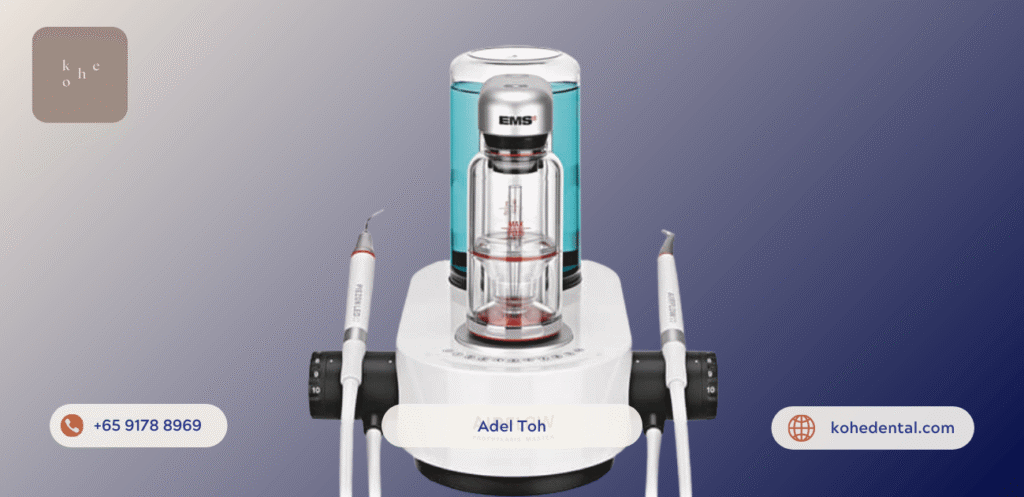
Is Guided Biofilm Therapy a scam?
Guided Biofilm Therapy is definitely not a scam. It is also not a marketing ploy for dental clinics. In fact, Guided Biofilm Therapy is a dental cleaning tool to help the following patient groups achieve better dental and systemic health outcomes:
| Patients with braces, clear aligners or lingual braces | Reduced incidences of incidental dental caries and/or mid-treatment gum disease. |
| Young children who still have their baby teeth | Reduced dietary-related dental caries encouraging better dental development. |
| Pregnant patients who are undergoing hormonal-induced gum disease | Healthier pregnancies with reduced systemic infections. |
| Patients who have menopause/andropause who are undergoing hormonal-induced gum disease | Reduced gum disease incidences with less incidences of xerostomia (dry mouth) and bad breath. |
| Patients who have chronic-disease induced oral health problems | Reduced systemic infection and improved gum and dental health. |
| Patients with existing dental restorations (e.g. dental implants, dental veneers, dental crowns, or full arch restoration) | Reduced risk of infection causing dental implant failure, and extending longevity of dental restorations. |
What in the World is Guided Biofilm Therapy?
If you think Guided Biofilm Therapy sounds so fancy or “atas,” it simply refers to the removal of biofilm from your teeth. To put it simply, you are removing bacteria from the surface of your teeth.
Biofilm does not just originate from the food and drink that we take. Research studies show that biofilm is produced in response to stress, antibiotics and immune responses.
Because these microorganisms are not visible to the naked eye, it can be hard to remove them properly if doing just scaling and polishing. Scaling and polishing is not targeted and can miss out areas of biofilm deposits.
Guided Biofilm Therapy first discloses them using a purple gel that is applied liberally over all your teeth. Once the biofilm has been disclosed, it will be removed entirely with a high pressure airflow spray (air polishing with compressed air) combined with fine compressed powder.
As the high pressure spray does not scrap against your teeth, there is less noise, and is less invasive than scaling and polishing.
An easy comparison would be how hotels use UV light to disclose hard and “invisible” stains that remain in hotel rooms. Without the UV light, it would not be possible to see some stains. In the same manner, Guided Biofilm Therapy first reveals, then cleans thoroughly.
Guided Biofilm Therapy vs Scaling and Polishing
Both Guided Biofilm Therapy and scaling and polishing are dental cleaning and dental hygiene maintenance treatments.
Done properly and thoroughly, both are able to staph off unnecessary dental problems and help maintain overall hygiene before, during and after orthodontic or dental prosthetic treatments.
| Guided Biofilm Therapy | Scaling and Polishing | |
| Cost | $150 – $200 per session Dental packages available. | $100 – $150 per session Dental packages available. |
| Treatment Duration | 30 – 45 mins per session | 30 – 45 mins per session |
| Pain Levels | No pain with little discomfort. | Might hurt if the patient has sensitive teeth and gums. |
| Noise Levels | Minimal noise as there is no scrapping involved. | Might have sharp and loud noises from scrapping. |
| Cleanliness Levels | Thorough cleaning with no biofilm traces left. You are also able to visibly verify whether the biofilm has been completely removed. | Might leave out large areas of biofilm due to lack of visibility. |
| Whitening Effect | Has a mild whitening effect if teeth staining is extrinsic and not intrinsic. | Does not have any whitening effect. |
| Suitability for Sensitive Teeth and Receding Gums | Suitable for sensitive teeth and gums and does not cause further sensitivity. | Might need to pace out scaling and polishing sessions for sensitive teeth and gums. |
| Suitability for Young Children | Suitable for young children who have dental phobia or are afraid of loud noises. | Might need to find an operator that is extra gentle as scaling and polishing can be quite traumatising for young children. |
| Suitability for Pregnant Mothers | Suitable for pregnant mothers who are looking for a gentle way to upkeep their overall gum and oral health. | Might need to find a gentle and attentive operator who is familiar with the nuances of pregnancy gum pain and soreness. |
| Suitability for Patients with Periodontal (Gum Disease) | Suitable for patients with gum disease as it is thorough without being painful or uncomfortable. | Might cause discomfort and some pain for patients who have advanced periodontal disease. |
| Suitable for Patients with Chronic Health Conditions | Suitable for patients who have chronic health conditions that affect their overall gum and dental health. | Suitable for patients who have chronic health conditions that affect their overall gum and dental health. |
| Recommended Treatment Intervals | 3 – 4 months for patients on braces, clear aligners or any other orthodontic treatments. 3 – 4 months for patients who have dental implants, full arch restorations or multiple dental restorations. 5- 6 months for patients who have high incidences or historical gum disease or xerostomia (dry mouth). 6 – 12 months for young children. 6 – 12 months for patients who simply want to upkeep their overall dental hygiene. | 3 – 4 months for patients on braces, clear aligners or any other orthodontic treatments. 3 – 4 months for patients who have dental implants, full arch restorations or multiple dental restorations. 5- 6 months for patients who have high incidences or historical gum disease or xerostomia (dry mouth). 6 – 12 months for young children. 6 – 12 months for patients who simply want to upkeep their overall dental hygiene. |
Guided Biofilm Therapy vs scaling and polishing: Which is better for dental hygiene during orthodontic treatment?
There is no treatment that is more superior than the other.
Guided Biofilm Therapy is not the better version of scaling and polishing, vice versa. Both of them have their own pros and cons. In some cases where calculus and tartar has hardened, it is necessary to combine both Guided Biofilm Therapy with scaling.
During orthodontic treatment, it is common for increased presence of biofilm, plaque and tartar to form around your braces brackets. In these instances, both Guided Biofilm Therapy and scaling and polishing are able to work equally well under the right operators.
However, if you fall under one of the following, Guided Biofilm Therapy might be more suitable:
- Have highly sensitive teeth and gums
- Have dental phobia/dental anxiety from fear of pain or fear of sounds
- Are currently having gum disease or progressing gum disease
- Sensitive to sounds from dental equipment
- Are intending to bring your young child for regular maintenance and want to make it a good and comfortable experience
- Have a child that requires special needs and arrangements to be made for their oral care.
Guided Biofilm Therapy vs scaling and polishing: Which is better for gum disease treatment?
Guided Biofilm Therapy might be more suitable for gum disease treatment like root planning.
In most gum disease cases, the patient has sore and painful gums. Scaling and polishing might cause further irritation to the gums because of how treatment is rendered.
In traditional scaling and polishing, dental ultrasonic scalers are used to clean between the gum lines. The scaler then scraps and “flushes” out possible food remnants and bacteria from between gum lines and tooth surfaces.
Guided Biofilm Therapy employs a gentler method with air, water and fine powder.
Instead of physically scrapping, the method involves disclosing biofilm which allows for targeted removal of biofilm. Using a high pressure jet spray with fine powder, it thoroughly cleans between the gum lines to stimulate improved gum health.
Guided Biofilm Therapy vs scaling and polishing: Which is better if I have multiple dental implants or dental restorations?
When it comes to dental restorations, a more effective approach is to use a combination of Guided Biofilm Therapy and scaling.
While Guided Biofilm Therapy can remove most biofilm from the smallest areas, a scaler tip is best to remove plaque and tartar build up that have been hardened, from the dental restoration.
Most dental restorations fail or reduce in prosthetic longevity because of poor oral hygiene or residue that have entered the margins of the restoration.
Guided Biofilm Therapy vs scaling and polishing: Which is better if I am afraid of pain?
If you are afraid of pain and discomfort during your dental cleaning, Guided Biofilm Therapy might be a better dental cleaning option for you. It is commonly known as the gentle dental cleaning method or a dental spa.
Unlike traditional scaling that uses an ultrasonic scaler to touch the surface of each tooth, Guided Biofilm Therapy uses water, air pressure and powder to gently remove biofilm off your teeth and between your gums.
Guided Biofilm Therapy: Before and After Results
While I am not able to show you the before and after results of Guided Biofilm Therapy because of PHMC guidelines, I can explain some of the before and after results.
| Before Guided Biofilm Therapy | After Guided Biofilm Therapy |
| Discoloured and Stained Teeth From Coffee, Wine or Coloured Foods and Fluids | Slightly reduced staining and whiter teeth compared to just traditional polishing. |
| Teeth with Calculus and Tartar | Biofilm completely removed with no traces of calculus and tartar. |
| Swollen, Red and Inflamed Looking Gums | Reduced gum inflammation after each session. |
Is Guided Biofilm Therapy Worth It?
Guided Biofilm Therapy can be especially worth it if you are fall under one of these patient groups:
| Patient Groups | Benefits for Patient Group |
| Young Children | A great oral hygiene and maintenance session that is interactive and stimulating. Encourages them to develop positive dental habits from a young age and teaches them how to brush and floss properly in a fun and engaging way. |
| Children, Teenagers and Adults with Ongoing Orthodontic Treatment | Helps remove plaque and biofilm around brackets, wires and aligner attachments that are difficult to clean with regular brushing. Reduces the risk of white spot lesions, tooth decay and gum inflammation during orthodontic treatment. |
| Pregnant Mothers with Shaky Teeth or Inflamed Gums | Gentle cleaning helps manage pregnancy-related gum inflammation and bleeding gums. Regular maintenance can reduce bacterial load in the mouth and improve overall gum health during pregnancy. |
| Patients with Gum Disease | Allows for targeted removal of biofilm and bacteria around the gums and between teeth. Supports gum healing and helps slow the progression of periodontal disease when combined with professional periodontal care. |
| Patients with Chronic Health-Related Gum Disease (e.g. Diabetes, Hypertension) | Helps control oral bacteria that may worsen gum inflammation in patients with systemic health conditions. Regular maintenance can contribute to better oral health stability and overall wellbeing. |
| Patients with Age-Related Gum and Bone Recession | Provides a gentle cleaning method that reduces irritation to exposed root surfaces. Helps maintain gum health while minimising discomfort in areas with gum recession. |
| Patients with Existing Dental Restorations (e.g. Dental Implants, Dental Veneers, Dental Bridges, Dental Crowns) | Helps maintain the health of surrounding gums and supporting structures around restorations. Proper maintenance prolongs the lifespan of dental work and reduces the risk of inflammation around implants or crowns. |
| Patients with Sensitive Gums and Teeth | A gentler cleaning approach compared to traditional scaling methods. Reduces discomfort during treatment while still effectively removing biofilm and plaque. |
| Patients with Dental Phobia/Dental Anxiety | A minimally invasive and comfortable cleaning method that helps reduce anxiety associated with traditional dental cleaning. The process is typically quieter, gentler and more predictable, making it more reassuring for anxious patients. |
What am I paying for when I go for Guided Biofilm Therapy?
When you go for Guided Biofilm Therapy, you are not just paying for dental cleaning. You are paying for a thorough dental cleaning that is done with intention, precision and patient education in mind.
Your session always starts off with a thorough oral assessment and examination by a dentist. The dentist will work with an oral hygienist (like myself) to document your current oral hygiene and dental condition.
Once the documentation is complete, biofilm disclosing gel (a purplish looking gel) will be placed on your teeth. The disclosing gel will reveal areas where your teeth have biofilm and give you a clear picture of how to better improve your daily brushing and flossing.
After the biofilm is revealed, the dental hygienist will gently remove the biofilm using a combination of warm water, fine powder and controlled air flow. This process allows us to clean the teeth, gumline and areas between teeth in a very targeted manner.
Unlike traditional cleaning methods that rely primarily on scraping hardened deposits, Guided Biofilm Therapy focuses first on removing the soft bacterial biofilm that causes most dental problems.
Once the biofilm has been removed, any remaining hardened tartar deposits will be carefully removed using ultrasonic instruments and precision hand instruments where necessary. This ensures that the teeth are cleaned thoroughly without unnecessary trauma to the teeth and gums.
At the end of the session, your teeth will be polished. Your dental hygienist will go through your oral hygiene techniques with you. This includes personalised guidance on how to brush, floss and maintain the areas that were previously difficult to clean.
Is it normal to pay $250 – $300 per session for Guided Biofilm Therapy per session?
Different dental clinics price their services differently. I am not at liberty to comment whether or not $250 – $300 per Guided Biofilm Therapy session is normal.
At kohe™ Dental, the cost of Guided Biofilm Therapy ranges from $150 – $200 per session. The breakdown will be as follows:
| Complexity of Treatment | Cost of Guided Biofilm Therapy | Duration of Treatment | Suitability based on Complexity of Treatment |
| Mild | $150 | 30 minutes | Regular 6 monthly dental cleaning. |
| Moderate | $180 | 45 minutes | Removes hard to remove plaque and tartar (calculus) from tooth surfaces. |
| Complex | $200 | 60 minutes | Remove bacteria and tartar from root surfaces, followed by planing (smoothing) the roots to prevent bacteria from reattaching. |
| Gum Disease Treatment | $250 per quadrant | 60 – 120 minutes | Thorough removal of bacteria and tartar from root surfaces followed by planing of roots to prep for implant or orthodontic work. |
Guided Biofilm Therapy is a great alternative to scaling and polishing
Guided Biofilm Therapy is not a gimmick or a replacement designed to make traditional scaling and polishing obsolete. Instead, it is a modern dental hygiene approach that focuses on identifying and removing the biofilm that causes most oral health problems.
By revealing bacteria before cleaning, dentists and oral health therapists like myself are able to treat your teeth and gums in a more targeted, comfortable and thorough manner.
The best dental cleaning method depends on your oral health needs, sensitivity levels and existing dental conditions. Whether you choose Guided Biofilm Therapy, scaling and polishing, or a combination of both, the most important factor is consistent professional dental maintenance and good daily oral hygiene habits.