- What is Guided Biofilm Therapy (GBT)?
- Is Guided Biofilm Therapy just a dental hype?
- Guided Biofilm Therapy vs Scaling and Polishing
- What are the Benefits of Guided Biofilm Therapy (GBT)?
- How Much Does Guided Biofilm Therapy Cost?
- When Should I Do Guided Biofilm Therapy?
- Is Guided Biofilm Therapy Worth It?
- Is Guided Biofilm Therapy Worth It? My Honest Conclusion
Most people think a “dental cleaning” is just scraping off tartar and polishing until the teeth feel smooth. But that mindset misses the real enemy: biofilm, the soft, sticky bacterial layer that keeps rebuilding even when you brush well.
Guided Biofilm Therapy (GBT) flips the experience from “blind cleaning” to a visible, guided, step-by-step protocol.
First, biofilm is revealed with a disclosing agent so you can actually see where it hides. Then the biofilm is removed gently and precisely using airflow cleaning, with ultrasonic instruments used only when needed. The goal is not to be aggressive but to be predictable, comfortable, and prevention-focused.
In this guide, you will learn what GBT really is (and what it is not), how it compares to scaling and polishing, who benefits most from it, and how pricing works at kohe™ Dental so you can decide if it is worth paying a bit more for a cleaning that is designed to be both thorough and patient-friendly.
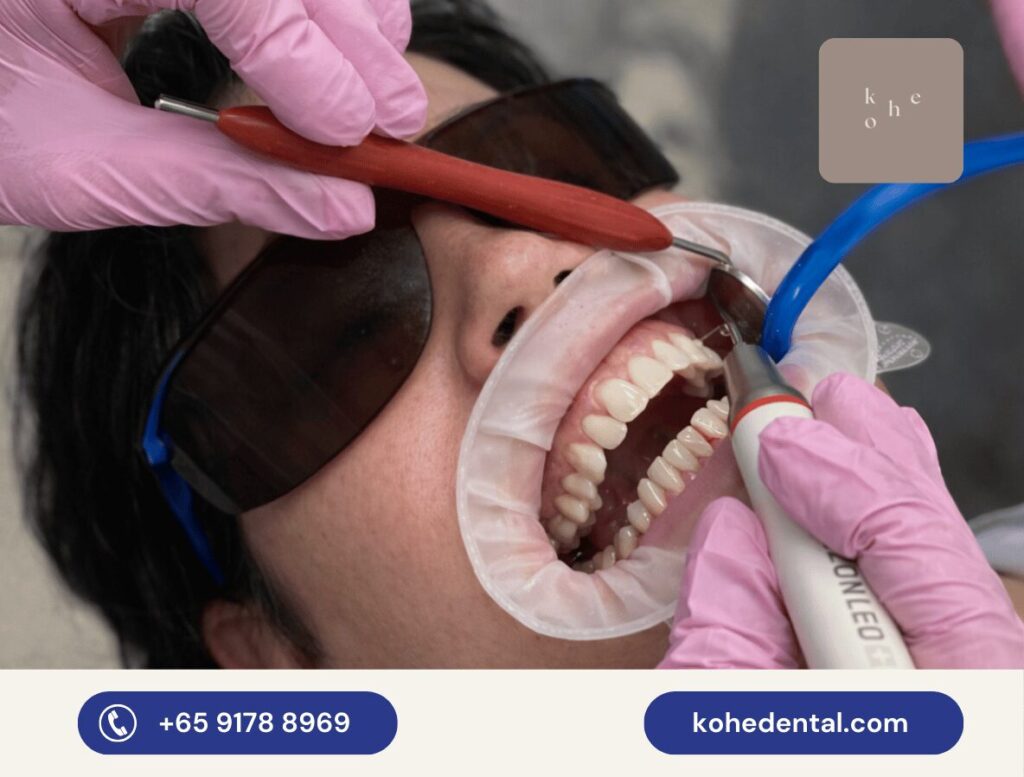
What is Guided Biofilm Therapy (GBT)?
Guided Biofilm Therapy (GBT) is a modern and non-invasive way of cleaning your teeth and gums. The patient journey combines comprehensive patient education with gentle dental cleaning that focuses on removing dental biofilm from your teeth and between your gums.
Biofilm is the soft, sticky layer that builds up on your teeth. Biofilm contains bacteria that can still be present even when you brush your teeth regularly and have excellent oral hygiene.
GBT is not just about scraping off hard tartar. It is a guided and step-by-step cleaning process that cleans gently and more predictably.
A typical Guided Biofilm Therapy visit will look like this:
| Step 1: Initial Evaluation and Examination | A thorough dental consultation is done to assess your gum and oral health. |
| Step 2: Reveal Biofilm with a Disclosing Agent | A disclosing agent is applied on your teeth. Biofilm is revealed with the disclosing agent. The disclosing agent reveals the hidden biofilm by staining it so that you can see where it sits. |
| Step 3: Remove Biofilm (Bacteria) with Airflow Cleaning | Biofilm is removed with airflow cleaning which is a combination of air, water and fine powder. The powder comes in different flavours. You can choose between the original (tasteless) and lime. It cleans the tooth surfaces and hard to reach areas. |
| Step 4: Remove Remaining Deposits with an Ultrasonic Tip | Should there be remaining deposits, it is removed with an ultrasonic tip. The ultrasonic tip is only used when needed. |
| Step 5: Polishing and Application of Fluoride | Polishing is done with a polishing brush followed by application of topical fluoride. |
Is Guided Biofilm Therapy just a dental hype?
Before you think: Is Guided Biofilm Therapy (GBT) another way for dental clinics to rip me off? The quick and definitive answer to that is no.
GBT is not just marketing. While dentistry can be full of buzzwords, GBT is NOT a magical machine. It is a dental treatment with a protocol that involves patient education, disclosing biofilm and biofilm removal.
It will not replace daily brushing. It cannot replace teeth whitening treatments. Neither will it instantly fix oral health problems or gum disease.
The value comes in:
- Making biofilm on your teeth visible so that your dentist or hygienist is able to completely remove it;
- Thorough but gentle dental cleaning that gets rid of all the hidden bacteria that might be lingering;
- Helping patients like yourself understand where your common biofilm areas are so that you can focus on brushing those areas better;
- Using targeted cleaning rather than random aggressive scraping like in scaling and polishing;
- A more comfortable dental cleaning experience for patients.
While GBT can be an excellent way of cleaning your teeth, your GBT practitioner might combine GBT with scaling if there is heavy tartar present as it is more stubborn to remove.
Guided Biofilm Therapy vs Scaling and Polishing
Traditional scaling and polishing removes tartar and stains using a scaler on teeth and in between the gum lines. It is then followed up with a polishing paste and a rotating brush. This can cause slight irritation or even pain for some patients, especially patients with gum disease.
It is not uncommon for biofilm remnants to be left on teeth even after scaling and polishing because these remnants cannot be easily seen with the naked eye.
Guided Biofilm Therapy (GBT) also cleans teeth, but with precision. It uses guided visibility by staining the tooth with a disclosing agent to reveal biofilm. Once the biofilm is revealed, your GBT practitioner show you where most of your biofilm is.
Revealing the biofilm enables the GBT practitioner to remove biofilm accurately and entirely. It also helps improve your brushing technique by understanding where all the calculus build up is.
Instead of removing calculus, tartar and stains with a scaler tip, GBT uses fine powder with air (airflow cleaning). This is a gentler and less invasive way of removing biofilm and surface staining.
The following table highlights the main differences between the two:
| Scaling and Polishing | Guided Biofilm Therapy |
| Starts with scaling | Starts with identifying biofilm zones |
| Removes tartar across many tooth surfaces | Precise and targeted removal of biofilm with airflow cleaning |
| Polishing is done at the end | Removes removing deposits if needed |
| Biofilm is removed as well but sometimes, not entirely due to lack of visibility | Treatment ends with a review and prevention planning |
Both scaling and polishing and guided biofilm therapy can work well. The best choice for you would depend on your current oral condition and sensitivity levels.
Does Guided Biofilm Therapy clean more thoroughly than scaling and polishing?
It depends. It can be more predictable when it comes to removal of biofilm. In certain cases where hard tartar removal is required, a combination of Guided Biofilm Therapy (GBT) and ultrasonic scaler or hand instruments are needed.
GBT is designed specifically to remove biofilm. The disclosing step helps ensure complete cleaning coverage. Airflow cleaning can reach grooves, areas behind braces, and tight spots easily.
Biofilm control is the key driver for gum stability. In cases where a patient who wishes to take up orthodontic or dental aesthetic treatments require gum treatment first, GBT can remove biofilm thoroughly and help support healthier gums. If you already have deep gum pockets, you may need more extensive dental cleaning.
What are the Benefits of Guided Biofilm Therapy (GBT)?
The immediate benefits of Guided Biofilm Therapy are that it reduces guesswork for both the patient (you) and the clinician who is removing biofilm from your teeth and gums. By disclosing biofilm on teeth, it reduces overtreatment where your teeth end up getting scraped more than necessary.
Common benefits can include:
- Better visibility of problem areas;
- Improvement of home oral care habits over time as you learn which areas your brush is missing;
- Gentle cleaning for patients who have extremely sensitive gums and teeth;
- Better access to hard to reach zones, especially for patients who are currently doing orthodontic treatment like braces or have existing dental restorations;
- Improved stain removal that can make the teeth look brighter;
- Prevention focused experience that includes behavioural changes, education and dental cleaning.
How Much Does Guided Biofilm Therapy Cost?
At kohe™ Dental, Guided Biofilm Therapy costs the following:
| Cost of Treatment | With 9% GST | |
| Maintenance for Orthodontic and Dental Restoration Work3 – 4 months | $130 | $141.70 |
| Routine Maintenance 6 monthly | $150 | $163.50 |
| Yearly Maintenance 12 monthly | $180 | $196.20 |
| Complex Gum Disease Treatment | $200 per quadrant | $218 |
In Singapore, the cost of Guided Biofilm Therapy is based on the positioning of the clinic, the time allocated and how complex the dental cleaning is.
Is Guided Biofilm Therapy more expensive than scaling and polishing?
GBT often costs slightly more than basic scaling and polishing because it usually takes more time and uses specialized consumables.
The following factors influence the final cost of Guided Biofilm treatment:
- How much time will it take to complete the treatment? More plaque, more staining, more buildup means longer sessions.
- What is the current state of your gums? Inflamed gums bleed more easily and can require gentler pacing. Deeper gum pockets may need a combination of Guided Biofilm Therapy and other treatments.
- How stained are your teeth? If you are a heavy smoker or tend to consume a lot of coffee, we may need more airflow time.
- Do you currently have any dental restorations? Crowns, bridges, veneers, implants can require more careful technique.
When Should I Do Guided Biofilm Therapy?
Most patients use Guided Biofilm Therapy as part of their routine maintenance.
I usually tell my patients that the frequency that they do Guided Biofilm Therapy is largely dependent on their lifestyle habits, their oral health conditions, and their systemic health.
It is not enough to guess risks based on how your teeth currently look.
Gum disease is silent. The best approach is to base it off your past dental history, whether you are currently undergoing orthodontic treatment, have existing dental restorations, how fast your biofilm returns and how likely you can develop gum disease or dental cavities.
A simple starting guide would be the following:
| Low Risk: Can come in once every 6 – 12 months | Have excellent brushing and flossing habits Do not generally have a habit of taking sweet or sticky foods Do not smoke or vape Do not have gum bleeding when brushing or flossing Low tartar buildup Have perfect teeth alignment and bite that does not hide tartar or calculus Do not currently have any existing dental restorations like dental crowns, dental implants or dental veneers. |
| Moderate Risk: Should come in every 4 – 6 months | Drink coffee or dark-coloured fluids regularly May sometimes skip brushing or flossing because of busy schedule Occasionally enjoy indulging in sweet and sticky foods Smokes or vapes socially Gum bleeds sometimes Crowded teeth that can trap food Might have existing dental restorations Undergoing orthodontic treatment |
| High Risk: Should come in every 3 months if possible | Has a history of gum disease Habitual smoker Has a chronic health condition like diabetes Might be suffering from dry mouth Heavy tartar buildup Misaligned teeth and bite Has extensive teeth restorations |
Can I do Guided Biofilm Therapy during orthodontic treatment?
Yes. It is actually highly recommended to do Guided Biofilm Therapy (GBT) during orthodontic treatment.
In many cases, Guided Biofilm Therapy is especially useful during orthodontic treatment. Brackets and wires trap food easily. Aligners can also increase plaque risk if you snack frequently. Biofilm control becomes harder. That is where GBT shines.
How it can help you during orthodontic treatment:
- Airflow cleaning can reach around brackets and wires to efficiently and effectively remove plaque and calculus;
- Gentle dental cleaning, especially if you are currently have gum tenderness from braces or clear aligner treatment;
- Remove biofilm around attachment edges for aligners;
- Reduces the risk of white spot lesions;
- Supports healthier gums and reduces inflammation;
- Get feedback on where your plaque builds up most so that you can adjust your cleaning routine immediately.
Is my child suitable for Guided Biofilm Therapy?
Children are often suitable for Guided Biofilm Therapy (GBT) because it is gentle and more comfortable than traditional scaling and polishing. We see children as young as 6 years old for GBT at our clinic.
Some children that we see also enjoy how education and interactive GBT sessions are. Parents have mentioned that the visual feedback at seeing plaque stained on teeth have slowly changed their oral hygiene habits for the good.
If you are considering GBT for your child, it can be a good choice if:
- They are on early orthodontic appliances or are currently undergoing braces, or clear aligner treatments like Angel Aligner KiD or Invisalign First;
- They consistently have plaque buildup despite regular brushing and flossing;
- They enjoy having frequent snacks or sugary drinks;
- They have inflamed gums that bleed when brushing;
- They dislike heading for regular dental cleanings due to teeth and gum sensitivity.
During the GBT session, a clinician will have a conversation with your child to determine their comfort levels towards sound, their ability to stay sedentary, as well as tactile sensations from the airflow. As some younger children may be more sensitive towards sounds or touch, they may need shorter sessions.
For parents, the real value is behavior change. A child who learns where plaque hides early can avoid cavities and gum issues later.
Is Guided Biofilm Therapy Worth It?
Guided Biofilm Therapy (GBT) is worth it if you have sensitive gums and teeth and want a less invasive way of maintaining your oral hygiene while improving gum stability. It can also be worth it if you require 3-6 monthly dental hygiene visits because of orthodontic or implant treatments and prefer a dental cleaning system that is more gentle than scaling and polishing.
It will not be worth it if you are intending to take up GBT simply for the brand name/label rather than an actual functional benefit.
Here some some case scenarios where GBT would be perfect for you:
- You are currently undergoing braces, clear aligners or even full mouth rehabilitation treatment and find it hard to brush around certain corners;
- You struggle with plaque control and prefer a more guided approach to help you identify common plaque accumulation regions/areas;
- Your teeth gets stained easily from tea, coffee or other coloured liquids and you want to lighten the stains on your teeth;
- You have sensitive teeth and have been avoiding scaling and polishing because of the scraping;
- You have implants, crowns, or lots of dental work done;
- You are getting ready for dental implants and have been sent for gum disease control;
- You want a prevention focused visit, not just a quick clean.
It may not be worth it if:
- You are happy with basic scaling and polishing;
- You only want the cheapest cleaning option.
Is Guided Biofilm Therapy Worth It? My Honest Conclusion
GBT is not a “magic machine.” It is also not a replacement for daily brushing, whitening, or proper gum treatment when gum disease is advanced. Its value is simpler and more practical. It makes biofilm visible, removes it more deliberately, and turns a routine cleaning into a session where you leave with better insight into your own risk zones, not just cleaner teeth.
If you have sensitive gums, frequent staining, orthodontic appliances, or multiple restorations (implants, crowns, veneers), GBT tends to be a strong fit because the airflow approach is gentle and reaches difficult areas well. If you have heavy tartar or deeper gum pockets, you may still need a combination of GBT and traditional scaling instruments. And if your priority is purely the lowest cost option, basic scaling and polishing may be the better match.