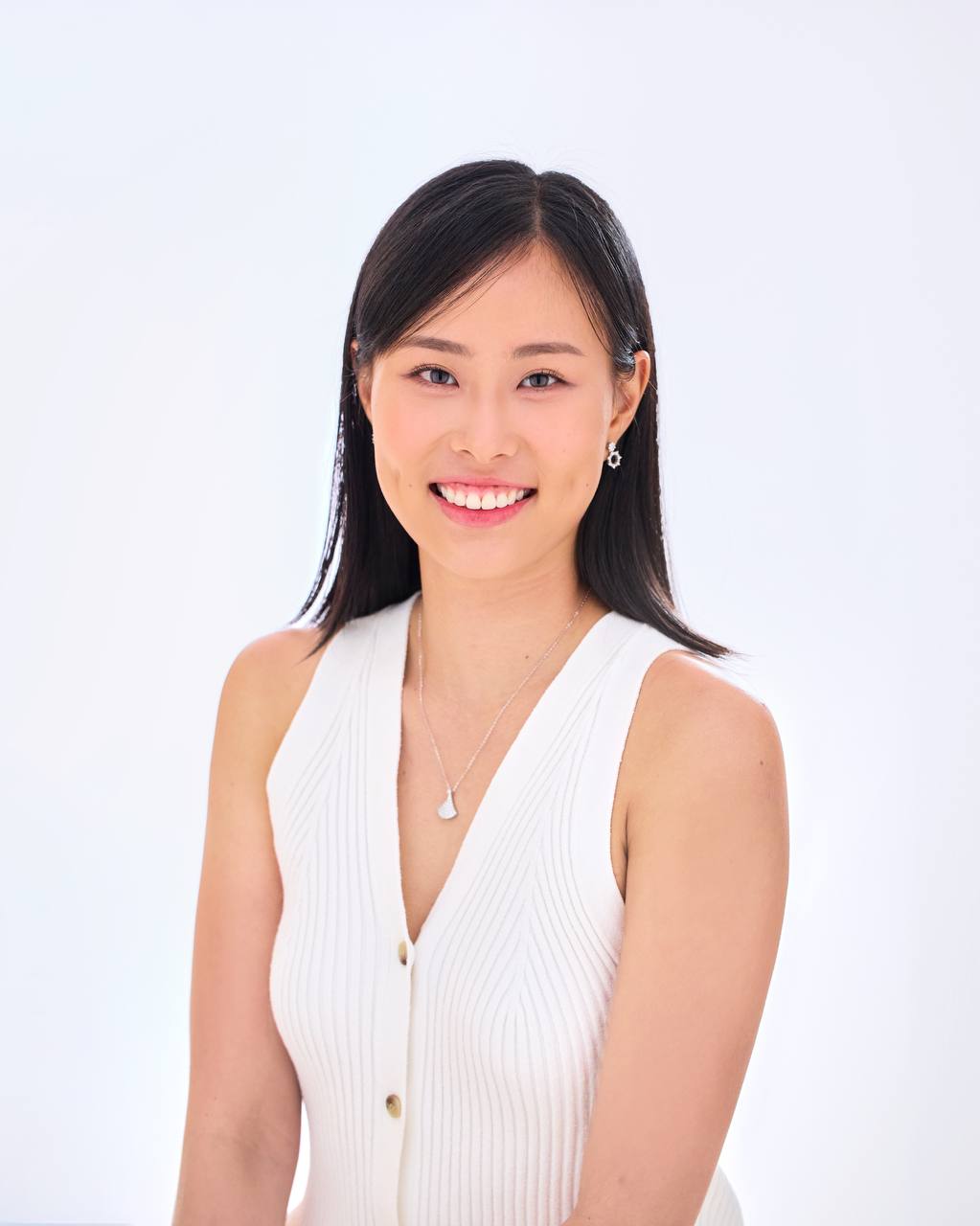
Full Mouth Rehabilitation and Complex Orthodontics
Dr Amanda Koh
- BDS (Bachelor of Dental Surgery), NUS
Dr Amanda Koh is the Founder and Clinical Director of kohe™ Dental. She is also a Key Opinion Leader for Angel Aligner.
She focuses on complex full-mouth rehabilitation and complex orthodontic treatment. Her most common cases are cases that require careful diagnosis, structured planning and multidisciplinary thinking.
Dr Amanda a meticulous and detail-oriented dentist whose work centers on:
- Comprehensive full-mouth rehabilitation and;
- Complex orthodontic treatment through fixed brackets (e.g. braces, ceramic braces, self-ligating braces, lingual braces) and clear aligners
- Early orthodontic development through myofunctional therapy and expansion therapy;
- Bite correction and long term functional stability;
- Non-extraction orthodontic treatment where clinically appropriate;
- Airway orthodontic treatment;
- Interdisciplinary treatment that involves orthodontics, prosthodontics and restorative care.
Dr Amanda is known for taking a highly considered approach to treatment planning. Rather than focusing on just straighter teeth, she assesses how each case should be managed in relation to bite, facial balance, long-term stability and overall dentition.
Dr Amanda prioritizes non-extraction orthodontics wherever possible as she firmly believes that every tooth matters. She has a particular interest in patients with more complex needs. This can include severe overcrowding, bite discrepancies, and facial or jaw asymmetry.
She believes that every patient deserves a beautiful, balanced smile that preserves their natural teeth and facial harmony.
Patients who see Dr Amanda are often looking for more than routine orthodontic care. Many are seeking a thorough diagnostic work-up, a clearer understanding of their treatment options, and a definitive plan for achieving a more holistic result.
Her patients describe her as calm, thorough, and deeply attentive to their fears and requests.
Whether aligning teeth, rebuilding worn dentitions, or restoring complex bite discrepancies, the philosophy of Dr Amanda is rooted in precision, function, and harmony—creating results that are both durable and naturally beautiful.
Patients That Dr Amanda Sees
Children aged 6 to 10 who need early orthodontic and jaw development assessment
Early childhood is often the most important window for assessing how the teeth, jaws, and bite are developing. At this stage, Dr Amanda sees children who may not yet need full orthodontic treatment, but who would benefit from careful monitoring and timely guidance. The goal is not to rush children into braces unnecessarily, but to identify whether their growth is progressing in a healthy and balanced way.
During this period, issues such as narrow dental arches, developing crossbites, bite imbalances, oral habits, and lack of space for erupting teeth may begin to appear. When recognised early, some of these problems can be managed more effectively while the child is still growing, which may help reduce the severity of future treatment. In other cases, the most appropriate approach may simply be observation and review at the right intervals.
Dr Amanda takes a measured and structured approach to early orthodontic assessment. She looks at more than just whether the teeth appear crooked. She also considers jaw growth, facial development, airway-related concerns where relevant, available space, and whether treatment timing is truly appropriate. This helps parents understand whether their child should start treatment now, later, or simply be monitored carefully over time.
Children, teens, and adults with narrow palates or constricted dental arches
A narrow palate or constricted dental arch can affect far more than the appearance of the smile.
In many patients, it may contribute to crowding, crossbites, bite imbalance, limited space for proper tooth eruption, and difficulties achieving a stable long-term orthodontic result. In more severe cases, it can also cause airway constriction.
Dr Amanda sees children, teens, and adults with these structural concerns and assesses whether the width and development of the arches may be playing a role in the patient’s overall dental condition.
In younger patients, identifying a narrow arch early can be especially valuable because growth may still be guided at a stage when treatment can be more favourable.
In teenagers and adults, the concern often presents in a different way, such as longstanding crowding, bite irregularities, relapse after previous treatment, or a smile that appears too narrow relative to the face. These cases often require more detailed planning rather than a routine straightening approach.
Dr Amanda evaluates arch form, jaw relationship, bite function, available space, and the broader effect that arch constriction may have on treatment planning. Her approach is careful and individualised.
Not every narrow palate requires the same treatment, and not every patient is suitable for expansion. The emphasis is on understanding the underlying structure properly and recommending the most appropriate path based on age, condition, and long-term stability.
Patients requiring palatal expansion or growth-guided orthodontic treatment
Palatal expansion and growth-guided orthodontic treatment are most appropriate when there is a clear developmental reason to intervene. Dr Amanda sees patients who may benefit from this type of treatment when there are signs that the jaws or dental arches are not developing in a favourable way. This may include narrowing of the upper jaw, crossbites, crowding due to lack of space, or growth patterns that may lead to more complex orthodontic problems later if left unmanaged.
For younger patients, treatment is often centred on timing. In some cases, guiding growth at the right stage can create better conditions for future tooth eruption, improve arch development, and support a more balanced bite. In other cases, it may be more appropriate to monitor growth rather than intervene immediately. The aim is always to act with purpose, not simply to start treatment early for its own sake.
Dr Amanda takes a structured approach to these cases. She assesses facial development, jaw relationship, available space, bite pattern, and the specific goals of treatment before making recommendations. Where palatal expansion or growth-guided treatment is appropriate, it is planned carefully as part of a broader long-term strategy. This allows treatment to be tailored to the patient’s developmental needs rather than applied as a one-size-fits-all solution.
Complex orthodontic cases involving severe crowding, crossbites, impacted teeth, or skeletal imbalance
Some orthodontic cases require a much deeper level of planning than routine alignment alone.
Dr Amanda sees patients with more complex problems such as severe crowding, crossbites, impacted teeth, and skeletal imbalances that affect the relationship between the upper and lower jaws.
These cases are often more demanding because they involve structural concerns, treatment sequencing, and long-term stability rather than simply moving teeth into straighter positions.
Patients with severe crowding may have limited space, difficult eruption patterns, or previous treatment recommendations that feel too simplistic for the complexity of the problem.
Crossbites may affect both function and development, especially when left unaddressed over time. Impacted teeth often require coordination between orthodontic planning and surgical management. Skeletal discrepancies may involve broader issues of facial balance, bite relationship, and whether camouflage or more comprehensive treatment is appropriate.
Dr Amanda approaches these cases with care, clarity, and clinical restraint.
She studies the underlying problem thoroughly before deciding how treatment should be sequenced and what goals are realistic. Her focus is on building a plan that is not only technically sound, but also stable and appropriate for the individual patient. For patients facing more difficult orthodontic concerns, this provides a clearer path forward and a more carefully reasoned treatment strategy.
Adults seeking comprehensive treatment with attention to function, facial balance, and long-term stability
Many adults seeking orthodontic care want more than straighter teeth.
They want treatment that is planned properly, suits their face, respects function, and remains stable over time.
Dr Amanda sees adults who are looking for a more comprehensive approach, especially when their concerns involve bite problems, crowding, wear, relapse after previous treatment, or a smile that does not feel balanced within the overall facial profile.
Adult orthodontic cases often require a different level of consideration from younger patients.
Growth is complete, previous dental work may already be present, and the goals of treatment must account for function, tooth support, facial presentation, and long-term maintenance. In some patients, the concern is primarily aesthetic. In others, the issue may be more complex, involving bite imbalance, limited space, worn teeth, or the need to coordinate orthodontics with restorative treatment.
Dr Amanda looks beyond surface alignment and focuses on how the teeth, bite, and facial structure work together. She believes treatment should be carefully tailored rather than routinely prescribed. Where appropriate, she also considers more conservative approaches, including non-extraction treatment in selected cases. This makes her especially suited to adults who value deeper planning, clear reasoning, and a treatment outcome that is both natural in appearance and stable in function.
Patients who value thorough diagnosis, careful planning, and definitive long-term solutions
Some patients are not looking for the fastest or most routine route into treatment. They want to understand their condition properly, know what their options are, and proceed with a plan that has been carefully thought through. Dr Amanda sees patients who value that level of depth. These individuals are often seeking clarity, precision, and a treatment recommendation based on diagnosis and long-term judgement rather than convenience alone.
This may include patients who have previously been given conflicting opinions, patients with complex bite or space-related concerns, or those who simply want a more comprehensive assessment before making a major decision. Many of them are willing to invest the time needed to understand why a problem exists, what the trade-offs are between different treatment approaches, and what will provide the most stable and appropriate result over time.
Dr Amanda’s approach is especially suited to patients who appreciate careful planning and clinical restraint. She does not treat orthodontics as a one-size-fits-all process, and she does not recommend treatment simply because it is possible. Instead, she focuses on what is justified, what is sequenced correctly, and what is most likely to provide a durable result. For patients seeking a definitive and well-reasoned path forward, this creates greater confidence in both the process and the outcome.
Patients who want to avoid jaw surgery and are exploring orthodontic camouflage where appropriate
Some patients are concerned about jaw surgery and want to understand whether their bite or facial concerns can be improved with orthodontic treatment alone.
Dr Amanda sees patients who are exploring orthodontic camouflage as a more conservative option, particularly when they prefer to avoid surgical treatment and want a clear understanding of what can realistically be achieved without it.
Orthodontic camouflage is not suitable for every case. In some patients, it may offer a practical way to improve alignment, bite relationships, and overall dental appearance without undergoing jaw surgery. In others, the underlying skeletal discrepancy may be too significant for camouflage to provide an ideal or stable result. This is why careful assessment is essential before any recommendation is made.
Dr Amanda approaches these cases with honesty and clinical restraint. She evaluates the severity of the skeletal imbalance, the condition of the teeth and supporting structures, facial profile, bite function, and the limitations of non-surgical treatment. Where camouflage is appropriate, it is planned with clear goals and realistic expectations. Where it is not, patients are guided accordingly. This makes her especially suited to individuals who want a thoughtful and balanced opinion on whether a non-surgical orthodontic approach is truly viable for their case.

Our Orthodontic Services
These are some of our common orthodontic services.
OneSmile
Smartee
Invisalign Palatal Expander
Angel Aligner KiD
Invisalign First
Gum Contouring
Clear Braces
Metal Braces
Self-Ligating Braces
Lingual Braces
Palatal Expander
Accelerated Orthodontics
Clear and Metal Retainers
Botox for TMJ
Our Orthodontic Brands

Invisalign
The original premium clear aligner brand with an extensive history of bettering smiles. Invisalign is able to treat simple to complex orthodontic conditions of all ages.

Angel Aligner
Angel Aligner has more than 20 years treating simple to complex orthodontic conditions. The clear aligner brand is known for its affordable treatment plans and correcting Asian profiles.

OneSmile
OneSmile is a comprehensive orthodontic clear aligner solution that offers both precision and remote monitoring. The brand is suitable for both Asian and Caucasian facial profiles.

Smartee
Smartee is a premium clear aligner brand that is used for extensive and complex orthodontic work. The brand can be used to correct severe jaw misalignment.
Find Us: kohe™ Dental
9 Oxley Rise, #03-01, The Oxley, Singapore 238697
Clear Aligners: Book an Appointment
General Enquiries: Consult a Dentist
Press and Media
Dr Amanda Koh: Frequently Asked Questions
Everything you need to know about Dr Amanda Koh and her interest in clear aligners and braces.
How do I book an appointment with Dr Amanda Koh?
You can book an appointment with Dr Amanda Koh by reaching out to us at the following channels:
Can I visit kohe™ without an appointment?
You will have to make an appointment with us before visiting kohe™ for your orthodontic appointment. This is because kohe™ is an appointments-only dental clinic.
kohe™ was intentionally built to be appointments-only to help reduce the overall overheads and operational costs of running a clinic. These savings are passed on to patients like yourself.
How much do I need to pay for clear aligners treatment at kohe™?
Most patients who visit kohe™ are patients with mild to moderate teeth alignment issues.
The cost for moderate alignment issues usually start from $3,500 for Angel Aligners and $5,800 for Invisalign.
Depending on the brand of clear aligners you decide to take up, the complexity of your teeth alignment issues as well as the pre-treatment you require, your cost of clear aligners treatment will differ.
How do I get in touch with kohe™?
You can get in touch with kohe™ through the following channels:
- Our Live Chat
- Our WhatsApp
Still have questions?
Not able to find the answers you are looking for? Chat with our patient coordinator.